Mastering Houseplant Watering: Your Easy Guide to Happy, Thriving Plants

The Golden Rule of Watering: “When to Water” (Not “How Often”)
Let’s be honest, watering can feel like the biggest mystery in houseplant care. Too much? Too little? It’s the number one cause of houseplant demise, but it doesn’t have to be yours! Forget rigid schedules like “every Wednesday” – your plants aren’t clocks. The secret to happy, thriving houseplants lies in understanding *when* they need a drink, not *how often* you think they should get one.
Table Of Content
- The Golden Rule of Watering: “When to Water” (Not “How Often”)
- How to Water Correctly: The Deep Soak Method
- Understanding Your Plant’s Thirst: Factors Influencing Watering Needs
- Common Watering Mistakes & How to Fix Them
- Your Weekly Watering Checklist & Troubleshooting
- Frequently Asked Questions
- How can I determine when my houseplant needs water?
- What is the correct way to water my houseplant?
- Why is it important to use room temperature water for my houseplant?
- Can I water my houseplant on a strict schedule?
- How often should I water my succulent or cactus?
So, how do you know it’s time? My favorite method, and honestly, the most reliable, is the good old finger test. Stick your index finger about two inches deep into the soil. If it feels dry, it’s time to water for most plants. For succulents and cacti, you want the soil to be completely dry all the way through before watering again. This simple tactile check gives you direct feedback on the soil’s moisture level, which can vary wildly based on pot size, plant type, and even the season.
If you’re not keen on getting your hands dirty, or you have a large collection, a moisture meter is a game-changer. These inexpensive tools (often 3-in-1, also measuring light and pH) have a probe you insert into the soil. They give you a reading from “dry” to “wet,” taking all the guesswork out. I remember when I first started, I lost a beautiful Fiddle Leaf Fig because I was watering on a strict schedule, not checking the soil. Once I invested in a moisture meter, my watering woes practically vanished! Another trick? Lift your pot. A dry pot feels significantly lighter than a wet one. Get to know the weight of your plants after a good drink versus when they’re thirsty.
How to Water Correctly: The Deep Soak Method
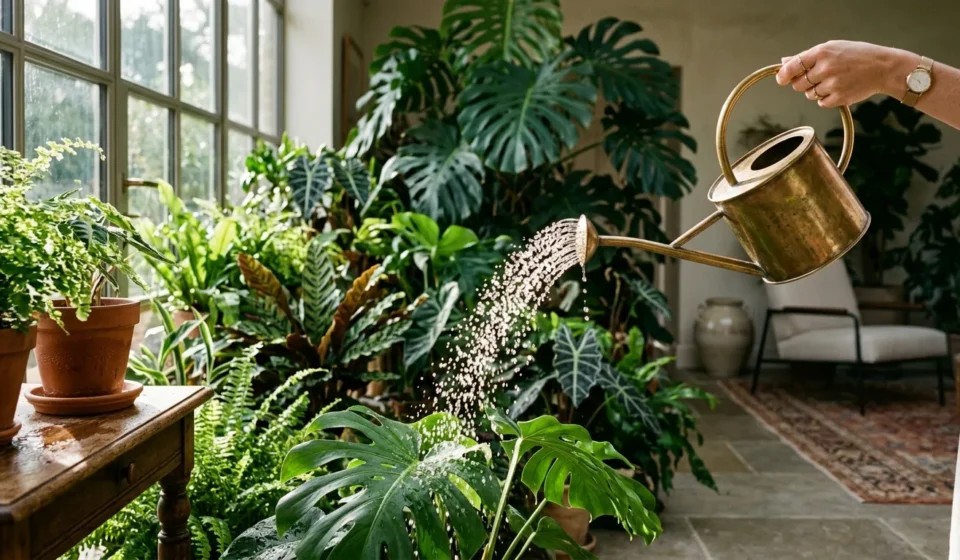
Once you’ve determined it’s watering day, the next step is crucial: how to actually water. The goal is to give your plant a thorough, deep soak, mimicking natural rainfall. This encourages roots to grow downwards, seeking moisture, which makes for a stronger, healthier plant. Grab your watering can and slowly pour water over the entire surface of the soil until you see it draining freely from the pot’s bottom holes. Yes, drainage holes are non-negotiable! Without them, your plant’s roots will sit in stagnant water, leading to dreaded root rot.
Let the plant sit in its drainage water for about 15-20 minutes to allow it to reabsorb any water it needs, then discard any remaining water in the saucer. You never want your plant sitting in standing water for extended periods. For some plants, especially those prone to fungus gnats or with sensitive foliage like Calatheas, bottom watering can be incredibly beneficial. To bottom water, place your potted plant (with drainage holes!) into a larger tray or sink filled with a few inches of water. Let it soak for 20-30 minutes, or until the topsoil feels damp, then remove it and let it drain completely.
And what about the water itself? Room temperature water is always best. Imagine a sudden splash of icy water – not pleasant, right? Your plants feel the same way! Most tap water is perfectly fine for houseplants, but if you have very hard water (high mineral content) or water treated with chlorine/chloramine, letting it sit out for 24 hours can help dissipate chemicals. For truly sensitive plants like ferns or prayer plants, distilled or filtered water can make a difference. Honestly, for the vast majority, tap water that’s been allowed to sit out is perfectly adequate in my experience.
Understanding Your Plant’s Thirst: Factors Influencing Watering Needs
Not all plants are created equal, and their watering needs are just as diverse as their beautiful leaves. This is where understanding your specific plant comes into play. For instance, succulents and cacti are designed to store water and prefer their soil to dry out completely between waterings. Think Snake Plants (Sansevieria) or ZZ Plants (Zamioculcas zamiifolia) – they thrive on neglect in the watering department. Tropical plants, on the other hand, like your Monstera deliciosa or ferns, prefer more consistent moisture, often needing water when the top 1-2 inches of soil are dry.
The amount of light your plant receives is another huge factor. Plants in bright indirect light or near a sunny window will use water much faster than those tucked away in a low-light corner. More light means more photosynthesis, which means more water uptake. Consider your pot material too: terracotta pots are porous and allow water to evaporate through their sides, meaning plants in them will dry out faster than those in non-porous plastic or glazed ceramic pots. Larger pots hold more soil and thus more moisture, so they’ll need watering less frequently than smaller pots.
Finally, don’t forget the impact of seasonality, temperature, and humidity. During the active growing season (spring and summer), plants are hungrier and thirstier. In the cooler, darker months of fall and winter, most plants enter a period of dormancy, significantly slowing their growth and water consumption. Similarly, a warm, dry room will dry out soil much faster than a cool, humid one. It’s like us – we drink more water on a hot summer day than on a chilly winter evening, right?
Common Watering Mistakes & How to Fix Them
Even seasoned plant parents make watering mistakes. The good news is, most are fixable! The most common culprit is overwatering, which often leads to root rot. Symptoms include yellowing leaves (especially lower ones), mushy stems, a foul smell from the soil, or small flies (fungus gnats) buzzing around. If you suspect overwatering, immediately stop watering, allow the soil to dry out completely, and if severe, carefully remove the plant from its pot, inspect the roots (trim off any black, mushy ones), and repot into fresh, well-draining soil.
On the flip side, underwatering can also cause distress. A thirsty plant will typically show wilting, drooping leaves, crispy brown edges, or stunted growth. The soil will often pull away from the sides of the pot. To remedy an underwatered plant, give it a thorough, deep soak. For severely dry plants, bottom watering can be particularly effective as it allows the parched soil to slowly rehydrate without washing away nutrients. After the initial rescue, adjust your watering frequency based on the tips we’ve discussed.
Other common pitfalls include using cold water (which can shock roots), not using pots with drainage holes (we covered this – essential!), or letting plants sit in standing water. Always err on the side of underwatering rather than overwatering if you’re unsure. It’s much easier to revive an underwatered plant than one with root rot. For example, imagine this situation: you’re going on vacation for a week. Instead of drenching your plants before you go, which might lead to root rot, it’s better to give them a good drink and perhaps use a self-watering wick system or ask a friend to check on them mid-week. That way, you mitigate the risk of serious damage.
Your Weekly Watering Checklist & Troubleshooting
To make watering truly easy houseplant care, here’s a simple routine to adopt:
- Check Your Plants Weekly: Make it a habit to check all your plants once a week. This doesn’t mean watering them all, just checking their soil moisture with your finger or a moisture meter.
- Listen to the Soil: For most plants, water when the top 1-2 inches of soil are dry. For succulents/cacti, wait until the soil is completely dry.
- Water Thoroughly: Always water until it drains from the bottom. Discard excess water.
- Observe Your Plants: Are leaves yellowing? Drooping? Crispy? These are your plant’s signals.
- Adjust for Season & Environment: Water less in winter, more in summer, more in bright light, less in low light.
Quick Troubleshooting Guide:
- Yellowing lower leaves, mushy stem: Likely overwatering. Let soil dry out, check for root rot.
- Drooping, crispy leaves, dry soil: Underwatering. Give a deep soak.
- Brown tips, otherwise healthy: Could be low humidity or inconsistent watering. Mist, use pebble trays, or water more consistently.
- Fungus gnats: Often a sign of consistently wet soil. Let soil dry out more between waterings. Consider bottom watering.
Your “what to do this week” takeaway: Get a moisture meter if you don’t have one! It’s the best investment for stress-free watering. Then, take 10 minutes to check all your plants. Feel the soil. Lift the pots. You’ll be amazed how quickly you learn to read your plants’ needs.
Watering doesn’t have to be a source of stress; it can be a deeply rewarding part of connecting with your plants. By understanding the “when” and “how,” and tuning into your specific plant’s signals and environment, you’ll develop an intuitive sense for their needs. Soon, you’ll be watering like a pro, enjoying a home full of vibrant, healthy greenery with minimal effort. Happy watering, plant parent!
Frequently Asked Questions
How can I determine when my houseplant needs water?
The best method to determine when your houseplant needs water is the finger test. Stick your index finger about two inches deep into the soil. If it feels dry, it's time to water for most plants. For succulents and cacti, you want the soil to be completely dry all the way through before watering again. You can also use a moisture meter for a more accurate reading.
What is the correct way to water my houseplant?
The correct way to water your houseplant is to give it a thorough, deep soak, mimicking natural rainfall. This encourages roots to grow downwards, seeking moisture, which makes for a stronger, healthier plant. Use a watering can and slowly pour water over the entire surface of the soil until you see it draining freely from the pot's bottom holes.
Why is it important to use room temperature water for my houseplant?
Using room temperature water is important because sudden changes in temperature can shock your plant. Imagine a sudden splash of icy water – not pleasant, right? Your plants feel the same way! Most tap water is perfectly fine for houseplants, but if you have very hard water or water treated with chlorine/chloramine, letting it sit out for 24 hours can help dissipate chemicals.
Can I water my houseplant on a strict schedule?
No, watering your houseplant on a strict schedule is not recommended. The secret to happy, thriving houseplants lies in understanding when they need a drink, not how often you think they should get one. This is because the soil's moisture level can vary wildly based on pot size, plant type, and even the season. Instead, check the soil moisture using the finger test or a moisture meter to determine when it's time to water.
How often should I water my succulent or cactus?
Succulents and cacti are designed to store water and prefer their soil to dry out completely between waterings. This means you should only water them when the soil is completely dry. The frequency of watering will depend on the specific plant, pot size, and environment, but as a general rule, it's better to err on the side of caution and underwater slightly than to overwater these plants.