Must-Have Plant Tools: Essential Gear for Every New Houseplant Parent

Forget the myth of the ‘green thumb’ – successful plant parenting isn’t some innate magical ability! It’s all about understanding your plants and, honestly, having the right tools for the job. Just like a chef needs good knives or an artist needs quality brushes, you’ll thrive with a few essential pieces of gear. Think of this as your foundational toolbox for a flourishing indoor jungle.
Table Of Content
- The Watering Wisdom Kit: No More Guesswork!
- A Trusty Watering Can
- The Game-Changer: A Moisture Meter
- Pruning & Tidying Essentials: Keeping Things Snappy and Clean
- Sharp Pruning Shears or Snips
- A Soft Cleaning Cloth or Brush
- Repotting & Soil Savvy: Setting Up for Success
- Potting Mat or Tray
- Small Trowel/Scoop & Potting Soil Components
- Pest Patrol & Plant Health Heroes: Guarding Your Greenery
- Neem Oil & Insecticidal Soap
- Gardening Gloves
- Common Mistakes New Plant Parents Make (and How Tools Help!)
- Your Quick “What to Do This Week” Takeaway
- Frequently Asked Questions
- What is the most important tool for a new houseplant parent to have?
- How can I determine the right amount of hydration for my plants?
- What is the benefit of using a moisture meter?
- Why are pruning shears or snips important for houseplant care?
- What features should I look for when choosing pruning shears or snips?
On easy houseplant care | Simple Indoor Plant Tips, we believe plant care should be simple and effective, and that starts with equipping yourself wisely. These aren’t fancy gadgets you’ll use once and forget; these are the workhorses that will transform your plant care routine from guesswork into pure joy. Let’s dive into the must-have items that will make your indoor garden flourish.
The Watering Wisdom Kit: No More Guesswork!
Watering is the trickiest part for many new plant parents, and getting it wrong is a common cause of plant demise. But what if I told you there are simple tools that take all the uncertainty out of it? This kit ensures your plants get just the right amount of hydration, every single time, making it one of the most important categories of essential plant tools.
A Trusty Watering Can
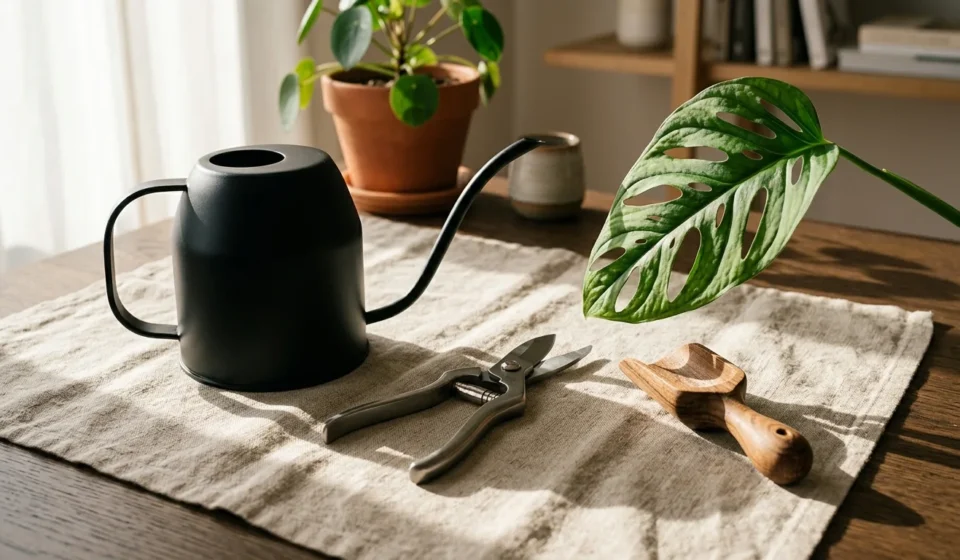
First up, a good watering can isn’t just for aesthetics – it’s crucial for precision. Look for one with a long, slender spout. This design allows you to direct water exactly where you want it, at the base of the plant, without drenching the leaves or making a mess on your windowsill. It also helps prevent water from accumulating in the crown of certain plants, like succulents, which can lead to rot.
You can find them in various materials, from stylish metal to lightweight plastic. Choose a size that’s manageable for you; a 1-liter (about 34 oz) can is perfect for a small collection, while larger collections might benefit from a 2-liter one to save on refills. Honestly, this simple tool makes a world of difference compared to using a kitchen cup, especially when you’re focusing on beginner plant care.
The Game-Changer: A Moisture Meter
This is, in my opinion, the absolute MVP for beginner plant parents. A moisture meter takes the guesswork completely out of watering. Instead of sticking your finger in the soil and hoping it feels right, this gadget gives you a clear reading of the soil’s moisture level deep down in the pot. It usually has a probe you insert into the soil, and a dial tells you if it’s wet, moist, or dry.
For example, imagine this situation: you’ve watered your Snake Plant a week ago, and the top inch of soil feels dry. But is it really dry deeper down? With a moisture meter, you’d insert the probe about two-thirds of the way down into the pot. If it reads “moist,” you know to wait a few more days, preventing dreaded overwatering. If it reads “dry,” it’s time to water! I recommend a simple 3-in-1 meter that also measures light and pH, though the moisture function is the key here. They’re inexpensive and will save you countless plants.
Pruning & Tidying Essentials: Keeping Things Snappy and Clean
Healthy plants often need a little trim here and there – to encourage new growth, remove dead leaves, or manage their shape. A clean, well-maintained plant is not only more attractive but also less prone to pests and diseases. Let’s talk about the houseplant supplies that help you keep your leafy friends looking their best.
Sharp Pruning Shears or Snips
Investing in a good pair of pruning shears or dedicated plant snips is non-negotiable. Dull scissors can crush plant stems, leaving jagged wounds that are difficult for the plant to heal and can invite infection. Sharp snips, on the other hand, make clean cuts, promoting faster healing and healthier growth. Look for stainless steel blades for rust resistance and a comfortable grip.
They don’t need to be huge; a small pair that fits comfortably in your hand is often all you need for houseplants. Use them to snip off yellowing leaves, prune back leggy stems on plants like Pothos or Philodendron, or take cuttings for propagation. Remember to clean your blades with rubbing alcohol between plants to prevent the spread of any potential diseases.
A Soft Cleaning Cloth or Brush
Dust isn’t just unsightly; it can actually hinder your plant’s ability to photosynthesize effectively by blocking light absorption. A soft, damp cloth (microfiber works wonders) or a small, soft-bristled brush is perfect for gently wiping down leaves. For fuzzy-leaved plants like African Violets, a soft brush is preferred over a cloth.
Make this a regular part of your routine, perhaps weekly or bi-weekly. Clean leaves not only look better but also breathe better, contributing to the overall health and vibrancy of your indoor greenery. This simple act of care can significantly boost your plant’s happiness!
Repotting & Soil Savvy: Setting Up for Success
Eventually, every houseplant needs a new home – whether it’s outgrowing its current pot or simply needing a refresh of nutrient-depleted soil. Repotting can feel intimidating, but with the right essential plant tools, it becomes a straightforward and even enjoyable task. This section covers the essentials for a smooth repotting experience.
Potting Mat or Tray
If you’ve ever repotted a plant directly on your kitchen counter, you know the mess that ensues! A potting mat is a game-changer for keeping your workspace tidy. These are typically waterproof, foldable mats with raised edges, designed to contain spilled soil, perlite, and other potting mix components. They’re usually made of durable plastic or fabric and are incredibly easy to clean and store.
Alternatively, a large plastic tray or even a dedicated “repotting tub” can serve the same purpose. This simple item allows you to repot your plants indoors without creating a massive cleanup operation, making you much more likely to tackle the task when it’s needed.
Small Trowel/Scoop & Potting Soil Components
While you can certainly use an old kitchen spoon, a dedicated small trowel or scoop makes handling soil much easier and cleaner. These are designed for working in pots, allowing for precise placement of soil around roots without compacting it too much. Look for a sturdy, rust-resistant material.
And speaking of soil, don’t forget the components! While not “tools” in the traditional sense, having a bag of good quality indoor potting mix, along with amendments like perlite (for drainage) and orchid bark (for aeration, especially for aroids like Monstera deliciosa), is crucial. These aren’t just nice-to-haves; they are the foundation for a healthy root system. For many plants, a blend of 50% potting mix, 30% perlite, and 20% orchid bark creates an excellent well-draining environment.
Pest Patrol & Plant Health Heroes: Guarding Your Greenery
Even the most diligently cared-for houseplants can occasionally encounter uninvited guests. Staying vigilant and being prepared with the right houseplant supplies can prevent small pest issues from becoming major infestations. Here’s what you need to keep your plants protected and your hands clean.
Neem Oil & Insecticidal Soap
These two are your best friends in the fight against common houseplant pests like spider mites, aphids, and mealybugs. Neem oil is a natural, organic insecticide that works by disrupting the pests’ feeding and reproductive cycles. It’s safe for most plants and pets when used as directed. Always dilute it according to package instructions (e.g., 1 tablespoon per quart of water) and apply as a foliar spray.
Insecticidal soap works by dissolving the protective outer layer of soft-bodied insects, causing them to dehydrate. It’s another excellent, low-toxicity option for direct contact treatment. Having both on hand gives you a versatile arsenal to tackle various pest problems head-on, ensuring your plants stay healthy and vibrant.
Gardening Gloves
While often overlooked, a good pair of gardening gloves can save your hands from a lot of grief. They protect against dirt, scratches from prickly leaves (hello, cactus parents!), and potential skin irritations from certain plant saps or pest treatments. Look for lightweight, breathable gloves that offer good dexterity, allowing you to handle delicate plants and perform tasks with precision.
They’re especially useful when dealing with repotting, handling messy soil, or applying sprays like neem oil. Trust me, your hands will thank you for this simple addition to your beginner plant care kit.
Common Mistakes New Plant Parents Make (and How Tools Help!)
Without the right gear, it’s easy to fall into some common traps. One major mistake is overwatering or underwatering due to guessing. Without a moisture meter, you’re essentially flying blind, which often leads to root rot from too much water or crispy leaves from too little. Another common error is using dull household scissors for pruning, which damages stems and can stress your plant. Lastly, many beginners neglect proper repotting hygiene, leading to messy cleanups and sometimes even pest reintroductions if old soil isn’t contained.
The beauty of having these essential plant tools is that they directly address these issues. A moisture meter provides accurate watering guidance, sharp pruning shears ensure clean cuts for healthier plants, and a potting mat keeps your workspace tidy, encouraging regular repotting. Investing in these tools upfront saves you frustration, money (from replacing plants!), and gives you confidence.
Your Quick “What to Do This Week” Takeaway
This week, take stock of your plant care arsenal! Pick one or two of these essential plant tools – perhaps a moisture meter and a good watering can – and add them to your cart. You’ll be amazed at how much easier and more enjoyable your plant parenting journey becomes with the right houseplant supplies by your side. Happy growing!
See? Becoming a confident houseplant parent isn’t about magic; it’s about being prepared. With these essential tools, you’re not just buying gadgets; you’re investing in the health and happiness of your plants, and frankly, in your own peace of mind. On easyhouseplantcare.com, we want to empower you to create a thriving indoor oasis without the stress. Go forth, equip yourself, and watch your indoor garden flourish with minimal effort!
Frequently Asked Questions
What is the most important tool for a new houseplant parent to have?
A good watering can is crucial for precision and is one of the most important tools for a new houseplant parent. It allows you to direct water exactly where you want it, at the base of the plant, without drenching the leaves or making a mess. This helps prevent water from accumulating in the crown of certain plants, like succulents, which can lead to rot.
How can I determine the right amount of hydration for my plants?
A moisture meter is a game-changer for beginner plant parents as it takes the guesswork completely out of watering. It gives you a clear reading of the soil's moisture level deep down in the pot, allowing you to determine if it’s wet, moist, or dry. This helps prevent overwatering and ensures your plants get just the right amount of hydration.
What is the benefit of using a moisture meter?
A moisture meter helps prevent overwatering by giving you a clear reading of the soil's moisture level. It also helps you avoid underwatering by indicating when the soil is dry. This simple tool makes a world of difference compared to using a kitchen cup or sticking your finger in the soil and hoping it feels right.
Why are pruning shears or snips important for houseplant care?
Pruning shears or snips are important for houseplant care as they help keep your plants looking their best. They allow you to make clean cuts, promoting faster healing and healthier growth. Dull scissors can crush plant stems, leaving jagged wounds that are difficult for the plant to heal and can invite infection.
What features should I look for when choosing pruning shears or snips?
When choosing pruning shears or snips, look for stainless steel blades for rust resistance and a comfortable grip. They don't need to be huge; a small pair that fits comfortably in your hand is often all you need for houseplants. Sharp snips are essential for making clean cuts and promoting healthy growth.