Is It Time to Repot? Your Simple Guide to Stress-Free Houseplant Repotting

Is Your Houseplant Begging for More Space? Let’s Find Out!
You’ve brought home a beautiful new houseplant, watched it grow, and maybe even nursed it through a tricky spot or two. But eventually, a question pops up for every plant parent: is it time to repot? The idea of repotting can feel a bit daunting, I know. Will you hurt your plant? Will it survive the move? Honestly, I’ve been there, fumbling with root balls and worrying about every snap. But trust me, once you understand the simple signs and steps, repotting becomes a vital, easy part of keeping your indoor jungle happy and thriving.
Table Of Content
- Is Your Houseplant Begging for More Space? Let’s Find Out!
- The Telltale Signs: When Your Plant is Crying for a New Home
- When NOT to Repot
- Picking the Perfect New Home: Pot Size & Potting Mix
- Choosing the Right Pot Size
- Crafting the Ideal Potting Mix
- The Stress-Free Repotting Process: Step-by-Step
- Common Repotting Mistakes to Sidestep
- Quick “What to Do This Week” Takeaway
- Give Your Plants the Gift of Growth!
- Frequently Asked Questions
- How do I know if my houseplant needs to be repotted?
- What are the benefits of repotting my houseplant?
- When is the best time to repot my houseplant?
- How do I choose the right pot size for my houseplant?
- What type of potting mix should I use for my houseplant?
Think of it like this: just as we need more legroom as we grow, our plants need more root room. Repotting isn’t just about giving them a bigger home; it’s about refreshing their soil, providing essential nutrients, and ensuring their overall health. For us at easy houseplant care | Simple Indoor Plant Tips, we believe plant care should be straightforward and rewarding, not stressful. So, let’s dive into how to know when to repot and make the process utterly stress-free!
The Telltale Signs: When Your Plant is Crying for a New Home
Your plants are always communicating with you, and nowhere is this clearer than when they’re outgrowing their current pot. Learning to read these signals is key. There’s no fixed schedule like “repot every 6 months”; instead, you need to observe. Here are the most common signs that indicate it’s time for a houseplant repotting session:
- Roots Emerging from Drainage Holes: This is the classic, undeniable sign. If you see roots peeking out the bottom, or even growing on top of the soil, your plant is root bound. This means its roots have completely filled the pot, leaving no room for growth or proper nutrient absorption.
- Water Runs Straight Through: Do you water your plant, and it seems like the water just drains immediately, barely soaking the soil? This often happens when there’s more root than soil, preventing the soil from retaining moisture.
- Stunted Growth or Yellowing Leaves: If your usually vigorous grower has suddenly slowed down, or if older leaves are yellowing despite proper watering and light, it could be struggling to get nutrients from depleted, tightly packed soil.
- Plant is Top-Heavy and Tips Over Easily: As your plant grows taller, its root system needs to expand to anchor it. If a gentle bump sends your plant tumbling, it’s likely outgrowing its base.
- Visible Salt/Mineral Buildup: White or crusty residue on the soil surface or pot rim can indicate a buildup of salts from fertilizer and tap water. While you can scrape some away, a fresh pot of soil is often the best solution.
For example, imagine this situation: you have a Pothos, a notoriously fast grower, and lately, you find yourself watering it almost every other day, even though you used to water it once a week. You then lift the pot and see a dense mat of white roots peeking out of every drainage hole. Bingo! That Pothos is practically screaming for a larger pot. Identifying these signs early is crucial for maintaining your plant’s healthy growth.
When NOT to Repot
While knowing when to repot is important, knowing when not to is equally vital. Avoid repotting a plant that is already stressed from pests, disease, or extreme environmental changes. Give it time to recover first. Also, most houseplants prefer repotting in the spring or early summer during their active growing season, giving them the best chance to recover and establish in their new home. Avoid repotting in late fall or winter when growth naturally slows down.
Picking the Perfect New Home: Pot Size & Potting Mix
So far, we’ve covered the “when.” Now let’s get to the really critical point: choosing the right setup for success. This isn’t just about aesthetics; it’s about providing the best environment for your plant’s roots. The right potting mix and pot size are fundamental.
Choosing the Right Pot Size
When you repot, generally, you want to go up just one pot size. This usually means a pot that’s 1-2 inches larger in diameter than the old one. For instance, if your plant is in a 6-inch pot, move it to an 8-inch pot. Why not bigger? A pot that’s too large holds excessive moisture, which can lead to root rot – the bane of many plant parents’ existence. Some plants, like Snake Plants (Sansevieria) and ZZ Plants, actually prefer to be a little root bound, so for them, you might only go up in size when their roots are truly bursting.
Always ensure your new pot has excellent drainage holes. This is non-negotiable! Without proper drainage, water sits stagnant, suffocating roots. Terracotta pots are fantastic for plants that like to dry out quickly, as the porous material helps evaporate excess moisture. Plastic pots retain moisture longer, which can be great for moisture-loving plants like ferns or Calatheas, but always double-check that drainage!
Crafting the Ideal Potting Mix
The soil is where your plant gets its nutrients and anchors itself, so don’t skimp here. A “well-draining soil mix” is one that allows water to pass through freely, preventing waterlogging, while still retaining enough moisture and nutrients for the plant. A general-purpose indoor potting mix is a good start, but I always recommend amending it. Based on my experience, adding components like perlite or orchid bark is a game-changer for most indoor plants.
- For most common houseplants (Pothos, Philodendron, Spider Plant): Mix 60% good quality indoor potting mix with 20% perlite and 20% coco coir or orchid bark. This provides excellent aeration and drainage.
- For succulents and cacti: Use a specialized succulent/cactus mix, or create your own with 50% potting mix, 30% perlite, and 20% coarse sand or grit.
- For Aroids (Monstera, Fiddle Leaf Fig, Peace Lily): A chunky aroid mix works wonders: 40% potting mix, 30% orchid bark, 20% perlite, 10% charcoal. This mimics their natural epiphytic environment.
The Stress-Free Repotting Process: Step-by-Step
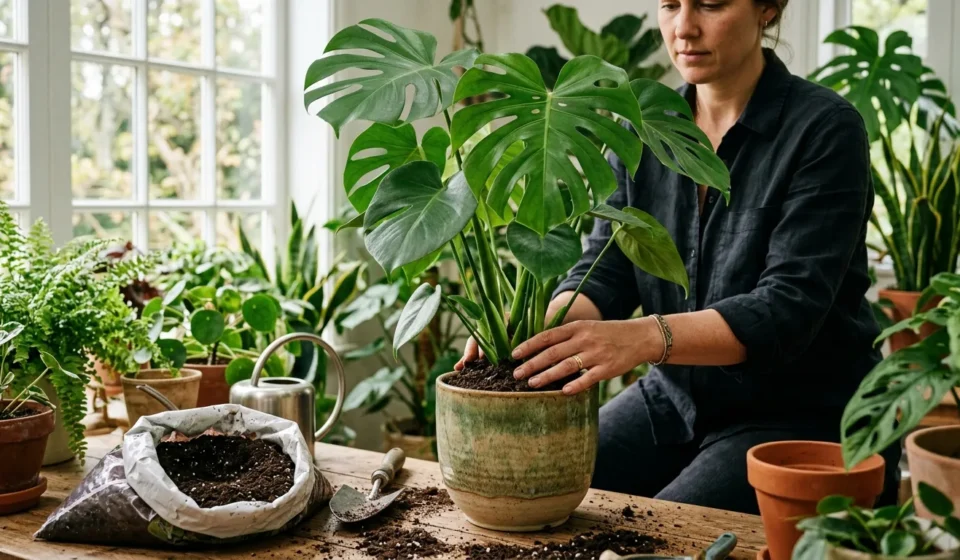
You’ve got your signs, your new pot, and your perfect potting mix. Now for the fun part! This step-by-step guide will walk you through the repotting process smoothly.
- Gather Your Supplies: New pot, fresh potting mix, a small trowel or scoop, pruning shears (for any dead roots), a watering can, and a tarp or newspaper to protect your workspace.
- Prepare the New Pot: Cover the drainage hole with a piece of mesh tape or a coffee filter to prevent soil from washing out while still allowing water to flow. Add a layer of your chosen potting mix to the bottom of the new pot – enough so that when your plant is placed in, the top of its root ball will be about 1 inch below the rim.
- Gently Remove Your Plant: Loosen the soil around the edges of the old pot with a knife or your trowel. Lay the plant on its side, hold the base of the stem, and gently pull the pot away. If it’s stubborn, you might need to squeeze plastic pots or tap ceramic ones. Never pull the plant by its stem!
- Inspect and Loosen Roots: Once out, gently tease apart the root ball with your fingers. If the roots are tightly circling (root bound), gently score them vertically in a few spots with your clean shears to encourage new outward growth. Trim away any mushy, dark, or rotting roots.</li<
- Position and Fill: Place your plant in the center of the new pot. Hold it upright and begin adding more potting mix around the root ball, gently tamping it down to remove large air pockets. Ensure the plant is at the same depth as it was in its old pot. Don’t bury the stem too deep!
- Water Thoroughly: After filling, water your plant generously until water drains from the bottom. This helps settle the soil and provides initial hydration. Place it back in its usual spot, or a slightly less intense light spot for a few days to recover from the shock.
Common Repotting Mistakes to Sidestep
Even with the best intentions, it’s easy to make a few common missteps. Knowing these can save you a headache and your plant some stress:
- Repotting Too Soon or Too Often: Only repot when necessary, using the signs we discussed. Repotting too frequently or when the plant doesn’t need it can cause unnecessary stress.
- Choosing a Pot That’s Too Big: We covered this, but it’s worth repeating. An oversized pot holds too much moisture, leading to root rot. Stick to that 1-2 inch jump!
- Using the Wrong Soil: Garden soil from outside is a big no-no for indoor plants – it’s too dense and can introduce pests. Always use a good quality, well-draining indoor potting mix tailored to your plant’s needs.
- Not Loosening the Root Ball: If you simply plop a root-bound plant into a larger pot without teasing out the roots, they might continue to grow in a tight circle, defeating the purpose of repotting.
- Fertilizing Immediately After Repotting: Fresh potting mix usually contains enough nutrients for a few weeks, sometimes even months. Wait at least 4-6 weeks before fertilizing, giving your plant time to adjust.
Quick “What to Do This Week” Takeaway
This week, take a few minutes to check your houseplants. Lift them, peer into the drainage holes, feel the soil, and observe their growth. Are any showing those tell-tale signs of being root bound? If so, consider making a plan to repot them in the coming weeks, especially if spring or early summer is approaching. Gather your supplies – maybe a new bag of perlite and a slightly larger pot – and get ready to give your green friends the upgrade they deserve!
Give Your Plants the Gift of Growth!
Repotting truly is a cornerstone of houseplant care. It might seem like a chore, but it’s an act of love that breathes new life into your beloved indoor plants. By understanding the signs, choosing the right materials, and following these simple steps, you’ll ensure your plants have the space and nutrients they need to flourish, bringing even more vibrancy and joy to your home. Happy repotting, plant parent!
Frequently Asked Questions
How do I know if my houseplant needs to be repotted?
Your houseplant may be begging for more space if you notice roots emerging from drainage holes, water running straight through the soil, stunted growth, yellowing leaves, or if the plant is top-heavy and tips over easily. These signs indicate that your plant has outgrown its current pot and needs a larger one to continue thriving.
What are the benefits of repotting my houseplant?
Repotting your houseplant provides several benefits, including giving the roots more room to grow, refreshing the soil, and providing essential nutrients. This helps to ensure the overall health and happiness of your plant, allowing it to continue growing and thriving.
When is the best time to repot my houseplant?
The best time to repot your houseplant is during the spring or early summer when it is in its active growing season. Avoid repotting in late fall or winter when growth naturally slows down, and also avoid repotting a plant that is already stressed from pests, disease, or extreme environmental changes.
How do I choose the right pot size for my houseplant?
When repotting, it's generally recommended to go up just one pot size. This provides enough room for the roots to grow without overwhelming the plant. Choosing the right pot size is critical to providing the best environment for your plant's roots and ensuring its continued health and happiness.
What type of potting mix should I use for my houseplant?
The right potting mix is fundamental to your plant's health and happiness. Look for a high-quality potting mix that is designed to provide the right balance of nutrients and moisture for your plant. Avoid using regular garden soil, as it can compact and prevent proper drainage, and instead opt for a mix that is specifically designed for indoor plants.