Sick Plant? Spot & Stop Common Houseplant Diseases Fast!

There’s nothing quite like the panic that sets in when you notice something isn’t quite right with your beloved houseplant. A new spot, a strange fuzz, or a sudden droop can send even seasoned plant parents into a spiral of worry. But what if I told you that most common houseplant diseases are totally manageable once you know what to look for and how to act?
Table Of Content
- The First Line of Defense: Prevention is Key
- Cleanliness Counts
- Spotting the Sickness: Common Houseplant Diseases
- Root Rot (Fungal)
- Powdery Mildew (Fungal)
- Leaf Spot (Fungal & Bacterial)
- Botrytis Blight (Grey Mold – Fungal)
- Stopping the Sickness: Your Treatment Toolkit
- Act Fast, Isolate & Prune
- Environmental Adjustments & Natural Remedies
- When to Bring out the Big Guns (Carefully!)
- Quick “What to Do This Week” Takeaway
- Frequently Asked Questions
- What is the most common cause of houseplant diseases?
- How can I prevent the spread of diseases among my houseplants?
- What are the symptoms of root rot in houseplants?
- How can I treat root rot in my houseplant?
- What is powdery mildew and how can I identify it?
Honestly, keeping your plants happy and healthy isn’t about having a green thumb as much as it is about being a good observer and knowing a few simple tricks. On Easy Houseplant Care, we’re all about making plant parenting stress-free. So, let’s dive into spotting the sneaky signs of sickness and, more importantly, stopping them in their tracks before they take over your indoor jungle!
The First Line of Defense: Prevention is Key
Before we even talk about specific diseases, let’s be real: prevention is always better than cure. Most houseplant diseases are opportunistic, meaning they strike when a plant is already weakened by improper care or environmental stress. Think of it like a cold – you’re more likely to catch one when you’re run down.
The single biggest culprit behind many common indoor plant issues, including diseases, is overwatering. When roots sit in soggy soil for too long, they can’t breathe, become weak, and are highly susceptible to fungal infections like root rot. Always check the soil moisture before watering – for most plants, the top 1-2 inches should feel dry. Use a good well-draining soil mix (like 50% potting mix, 30% perlite, 20% orchid bark for aroids) and pots with drainage holes to give your plants the best chance.
Another crucial preventative step is good airflow. Stagnant, humid air is a breeding ground for fungal spores. Ensure your plants aren’t crammed together and consider a small fan for larger collections. And here’s a big one: quarantine new plants! Based on my experience, bringing home a new plant without isolating it for a couple of weeks is how most pests and diseases sneak into your home. Keep it separate, observe it closely, and only introduce it to your other green friends once you’re certain it’s healthy.
Cleanliness Counts
Just like you clean your home, your plant tools need a refresh too. Sterilize your pruning shears with rubbing alcohol or a bleach solution (1 part bleach to 9 parts water) between plants, especially when you’re pruning a sick one. This simple step prevents you from inadvertently spreading pathogens from one plant to another. Also, remove any fallen leaves or spent blooms promptly, as decaying organic matter can attract pests and fungi.
Spotting the Sickness: Common Houseplant Diseases
Alright, let’s get down to identifying the bad guys. It’s important to differentiate between general stress (like yellowing leaves from underwatering) and actual disease symptoms. Diseases usually present with more specific, often spreading, patterns.
Root Rot (Fungal)
This is perhaps the most common and deadly houseplant disease. It’s often caused by overwatering and poor drainage, leading to fungal pathogens attacking the roots.
- Symptoms: Yellowing, wilting leaves (despite moist soil), stunted growth, soft or mushy stems near the soil line, and eventually, plant collapse. If you pull the plant from its pot, the roots will be dark brown or black and feel mushy, not firm and white.
- What to do: Immediately unpot the plant. Gently remove as much old soil as possible. Use sterilized shears to cut away all dark, mushy roots, leaving only healthy, firm ones. You can dip the remaining roots in a diluted hydrogen peroxide solution (1 part 3% hydrogen peroxide to 2 parts water) for a few minutes to kill lingering fungi. Repot into fresh, well-draining soil and a clean pot, watering sparingly for the next few weeks.
Powdery Mildew (Fungal)
This disease looks exactly like its name suggests – a powdery white coating on leaves and sometimes stems. It’s common in environments with poor air circulation and high humidity.
- Symptoms: White, powdery spots or patches on the surface of leaves, often starting on older leaves and spreading. The affected areas might eventually yellow or distort.
- What to do: Isolate the plant. Prune off severely affected leaves with sterilized scissors. For mild cases, you can wipe leaves with a damp cloth. For more widespread issues, spray the plant with a solution of neem oil (diluted according to product instructions) or a homemade baking soda spray (1 teaspoon baking soda in 1 quart of water with a few drops of dish soap). Improve air circulation around the plant.
Leaf Spot (Fungal & Bacterial)
Leaf spot diseases manifest as distinct spots on leaves, varying in color, size, and shape depending on the pathogen. They thrive in humid conditions and when water sits on leaves for extended periods.
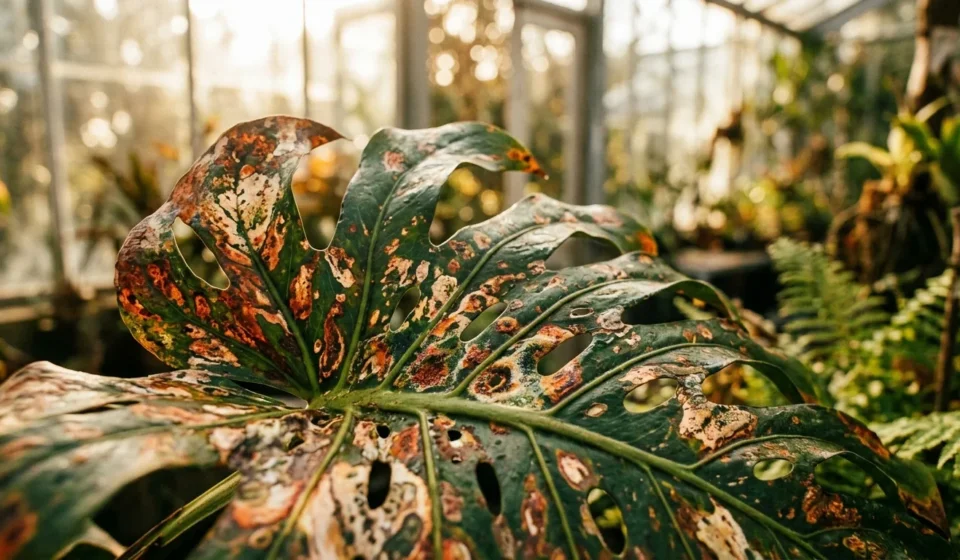
- Symptoms: Small, dark brown or black spots, often with a yellow halo, on leaves. These spots can merge to form larger blotches. Bacterial leaf spots might look water-soaked and spread rapidly.
- What to do: Remove and discard affected leaves immediately to prevent spread. Avoid overhead watering; water at the soil level. Ensure good air circulation. For fungal leaf spot, a copper-based fungicide or neem oil can be effective. For bacterial leaf spot, there are fewer chemical treatments; focus on removing affected parts and improving environmental conditions.
Botrytis Blight (Grey Mold – Fungal)
This fungal disease often attacks stressed plants in cool, damp, poorly ventilated environments.
- Symptoms: A fuzzy, grayish-brown mold that appears on leaves, stems, and flowers, often starting on damaged or decaying plant tissue. Affected areas become soft and mushy.
- What to do: Isolate and remove all infected plant parts immediately. Improve air circulation and reduce humidity around the plant. Avoid misting. Water carefully to keep leaves dry. Fungicides can help in severe cases, but often improving environmental factors is enough.
Stopping the Sickness: Your Treatment Toolkit
So far we’ve covered how to spot the common issues. Now let’s get to the really critical point: what to do once you’ve diagnosed a problem. Swift action is your best friend.
Act Fast, Isolate & Prune
The moment you suspect a disease, isolate the affected plant from its neighbors. This prevents the spread of spores or bacteria to your healthy plants. Next, grab those sterilized shears and prune away all visibly diseased parts. Don’t be shy; often, removing a few leaves now can save the entire plant. Dispose of these infected cuttings in the trash, not your compost, to avoid spreading the issue.
Environmental Adjustments & Natural Remedies
Once you’ve removed the visible disease, focus on the environment. Improve air circulation, ensure proper bright indirect light (most plants won’t appreciate being in a dark corner when sick), and adjust your watering routine. For many fungal issues, neem oil is an excellent organic solution. It works as an insecticide and fungicide. Mix it according to package directions and spray your plant thoroughly, ensuring to get both the tops and undersides of leaves. Repeat every 7-10 days until the problem is resolved.
When to Bring out the Big Guns (Carefully!)
For very persistent or severe fungal infections, you might consider a copper-based fungicide. Always read labels carefully and use in a well-ventilated area. For root rot, as mentioned, hydrogen peroxide can be a lifesaver. Remember, these are usually last resorts after you’ve exhausted environmental improvements and gentler remedies.
Quick “What to Do This Week” Takeaway
Don’t let the thought of plant diseases intimidate you. You’ve got this! This week, take a moment to inspect your plants closely. Look for any unusual spots, wilting, or discoloration. Catching problems early is the absolute best way to keep your houseplants thriving.
If you spot something suspicious, refer back to this guide from Easy Houseplant Care, isolate the plant, and start treatment. Remember, every plant parent has dealt with a sick plant at some point – it’s part of the journey. With a little knowledge and timely action, you can nurse your green companions back to health and enjoy their beauty for years to come!
Frequently Asked Questions
What is the most common cause of houseplant diseases?
The most common cause of houseplant diseases is overwatering, which can lead to fungal infections like root rot. When roots sit in soggy soil for too long, they can't breathe, become weak, and are highly susceptible to disease. To prevent this, it's essential to check the soil moisture before watering and use a well-draining soil mix and pots with drainage holes.
How can I prevent the spread of diseases among my houseplants?
Prevention is key to stopping the spread of diseases among houseplants. This can be achieved by quarantining new plants for a couple of weeks before introducing them to your other plants, ensuring good airflow, and sterilizing your pruning shears with rubbing alcohol or a bleach solution between plants. Additionally, removing any fallen leaves or spent blooms promptly can help prevent the spread of diseases.
What are the symptoms of root rot in houseplants?
The symptoms of root rot in houseplants include yellowing, wilting leaves despite moist soil, stunted growth, soft or mushy stems near the soil line, and eventually, plant collapse. If you pull the plant from its pot, the roots will be dark brown or black and feel mushy, not firm and white. It's essential to identify these symptoms early to take prompt action and save your plant.
How can I treat root rot in my houseplant?
To treat root rot, immediately unpot the plant and gently remove as much old soil as possible. Use sterilized shears to cut away all dark, mushy roots, leaving only healthy, firm ones. You can dip the remaining roots in a diluted hydrogen peroxide solution for a few minutes to kill lingering fungi. Then, repot the plant into fresh, well-draining soil and a clean pot, watering sparingly for the next few weeks.
What is powdery mildew and how can I identify it?
Powdery mildew is a fungal disease that looks like a powdery white coating on leaves and sometimes stems. It's common in environments with poor air circulation and high humidity. To identify powdery mildew, look for a white, powdery coating on your plant's leaves or stems. It's essential to take action promptly to prevent the spread of the disease and treat your plant accordingly.