
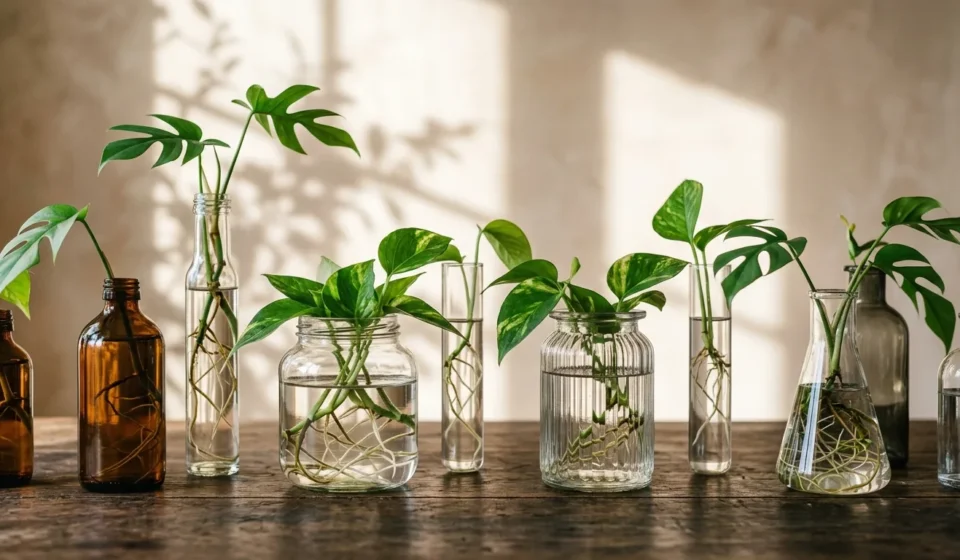
Grow More for Free: Easy Water Propagation

Introduction to Water Propagation
Imagine having a lush, green indoor garden without breaking the bank. One way to achieve this is by propagating your existing houseplants. I still remember when I first discovered the magic of water propagation – I was able to multiply my favorite Pothos plant and share it with friends and family. Water propagation is a simple and cost-effective method that allows you to grow new plants from cuttings, using just a glass of water. In this article, we’ll explore how to propagate popular houseplants like Pothos, Philodendron, and more, using water.
Table Of Content
- Introduction to Water Propagation
- Choosing the Right Plants for Water Propagation
- Popular Houseplants for Water Propagation
- Step-by-Step Water Propagation Guide
- Materials Needed
- Tips and Tricks for Successful Water Propagation
- Caring for Your Water-Propagated Cuttings
- Common Mistakes to Avoid in Water Propagation
- Frequently Asked Questions
- What is water propagation and how does it work?
- Which houseplants are suitable for water propagation?
- What materials are needed for water propagation?
- How do I care for my water-propagated cuttings?
- What are some common mistakes to avoid in water propagation?
But what would you do if you wanted to multiply your favorite houseplant without spending any money? That’s where water propagation comes in. It’s a low-risk and easy method that requires minimal equipment and care. So, let’s dive in and learn how to propagate your houseplants using water.
In my opinion, water propagation is one of the most rewarding ways to multiply your houseplants. Not only is it easy, but it’s also a great way to share plants with friends and family. And, as an added bonus, you’ll be able to see the roots develop in the water, which is a fascinating process.
Choosing the Right Plants for Water Propagation
Popular Houseplants for Water Propagation
Not all houseplants are suitable for water propagation, but some popular ones include Pothos, Philodendron, Dracaena, and Peace Lily. These plants have a high success rate and can thrive in water. When choosing a plant for water propagation, make sure to select healthy stems with at least two nodes. Nodes are the small, swollen areas on the stem where the leaves meet the stem.
For example, imagine you have a Pothos plant with long, trailing stems. You can cut the stems into sections, making sure each section has at least two nodes. Then, simply place the cut ends in a glass of water, and wait for the magic to happen.
To increase your chances of success, make sure to choose plants that are free of pests and diseases. You can also take cuttings from plants that are growing vigorously, as they will have a higher chance of rooting in water.
Step-by-Step Water Propagation Guide
Materials Needed
To get started with water propagation, you’ll need a few simple materials. These include:
- A clean glass or jar with a wide mouth
- Water
- A healthy stem cutting from your chosen plant
- A scissors or pruning tool
Now, let’s move on to the step-by-step guide. First, fill the glass with water, leaving about an inch at the top. Then, cut the stem from your chosen plant, making sure to cut just below a node. Remove any lower leaves that will be submerged in water, as they can rot and cause problems.
Place the cut end of the stem in the water, making sure the node is fully submerged. You can use a rock or a paper clip to weigh down the stem if it floats to the surface. Finally, place the glass in a bright, indirectly lit area, and wait for the roots to develop.
Tips and Tricks for Successful Water Propagation
Caring for Your Water-Propagated Cuttings
Once you’ve placed your cuttings in water, it’s essential to provide them with the right conditions. Make sure the water level is topped up regularly, and change the water completely every 1-2 weeks to prevent bacterial growth. You can also add a small amount of fertilizer to the water to promote healthy root growth.
But what would you do if you notice that your cuttings are not developing roots? Don’t worry, it’s not uncommon for cuttings to take a little longer to root. Just make sure to check the water level and change the water as needed. You can also try using a rooting hormone to stimulate root growth.
In my experience, water propagation can be a bit trial-and-error. But with a little patience and practice, you’ll be able to successfully propagate your favorite houseplants. So, don’t be discouraged if it takes a few attempts to get it right.
Common Mistakes to Avoid in Water Propagation
While water propagation is a relatively easy method, there are a few common mistakes to avoid. These include:
- Not changing the water regularly, which can lead to bacterial growth and root rot
- Not providing enough light, which can slow down root development
- Not using a clean glass or jar, which can contaminate the water and prevent root growth
By avoiding these common mistakes, you’ll be able to increase your chances of success and enjoy the rewards of water propagation. So, let’s recap the key takeaways from this article.
To get started with water propagation, simply choose a healthy stem cutting, place it in a glass of water, and provide it with the right conditions. With a little patience and practice, you’ll be able to multiply your favorite houseplants and enjoy the many benefits of water propagation.
Frequently Asked Questions
What is water propagation and how does it work?
Water propagation is a simple and cost-effective method that allows you to grow new plants from cuttings, using just a glass of water. It's a low-risk and easy method that requires minimal equipment and care. By placing a cutting from a healthy stem in a glass of water, you can stimulate root growth and eventually transplant the new plant into soil.
Which houseplants are suitable for water propagation?
Some popular houseplants that are suitable for water propagation include Pothos, Philodendron, Dracaena, and Peace Lily. These plants have a high success rate and can thrive in water. When choosing a plant for water propagation, make sure to select healthy stems with at least two nodes.
What materials are needed for water propagation?
To get started with water propagation, you'll need a few simple materials, including a clean glass or jar with a wide mouth, water, a healthy stem cutting from your chosen plant, and a scissors or pruning tool. You can also use a rock or a paper clip to weigh down the stem if it floats to the surface.
How do I care for my water-propagated cuttings?
Once you've placed your cuttings in water, it's essential to provide them with the right conditions. Make sure the water level is topped up regularly, and change the water completely every 1-2 weeks to prevent bacterial growth. You can also add a small amount of fertilizer to the water to promote healthy root growth.
What are some common mistakes to avoid in water propagation?
Some common mistakes to avoid in water propagation include not changing the water regularly, which can lead to bacterial growth, and not providing enough light for the cuttings. It's also important to make sure the node is fully submerged in water and to avoid over-handling the cuttings, which can cause damage to the roots.