Grow More for Free: Easy Water Propagation for Popular Houseplants

Imagine turning one lush houseplant into two, three, or even more, all without spending a dime. Sounds like magic, right? Well, it’s not magic; it’s the wonderfully simple art of water propagation. This method allows you to root cuttings from your favorite plants directly in water, watching new life emerge before your very eyes. It’s truly one of the most satisfying and rewarding aspects of indoor gardening, especially for those of us who love expanding our green collections without breaking the bank.
Table Of Content
- Why Water Propagation is Your Secret Weapon for More Plants
- Gathering Your Gear: What You’ll Need
- Step-by-Step Guide: How to Take Cuttings and Root Them in Water
- Step 1: Choose Your Mother Plant Wisely
- Step 2: Make the Perfect Cut
- Step 3: Set Up Your Propagation Station
- Step 4: The Waiting Game (and How to Help It Along)
- Troubleshooting & Common Mistakes to Avoid
- No Roots? Don’t Panic!
- Rotting Cuttings? Here’s What Went Wrong.
- Transitioning to Soil: The Delicate Dance
- Your First Potting: From Water to Soil
- Quick “What to Do This Week” Takeaway
At Easy Houseplant Care, we believe everyone deserves a home full of thriving greenery, and propagation is a fantastic way to achieve that. Whether you’re looking to multiply your beloved Pothos, share a piece of your Philodendron with a friend, or simply explore the fascinating lifecycle of plants, water propagation is your easiest entry point. Forget complicated routines; this guide will walk you through everything you need to know to successfully grow more plants for free.
Why Water Propagation is Your Secret Weapon for More Plants
For countless plant enthusiasts, water propagation is the go-to method for expanding their indoor jungle. Why? First, it’s incredibly beginner-friendly. There’s no messy soil involved initially, making the process clean and straightforward. You simply take a cutting, pop it in water, and watch.
Second, it offers a fascinating visual experience. You get to observe the miracle of roots forming, growing longer and stronger each day. This transparency provides a clear indication of your cutting’s progress, which can be incredibly encouraging, especially for new plant parents. And honestly, who doesn’t love getting more plants without opening their wallet? It’s perfect for gifting, swapping with friends, or simply filling every corner of your home with vibrant life.
Gathering Your Gear: What You’ll Need
Before we dive into the nitty-gritty of taking cuttings, let’s make sure you have everything ready. The good news is, you don’t need much, and chances are you already own most of these items.
- Sharp Scissors or Pruning Shears: Clean cuts heal better and are less prone to disease. Always sterilize your tools with rubbing alcohol before and after use to prevent spreading pathogens.
- Clean Glass Jars, Vases, or Test Tubes: Clear containers are best so you can easily monitor root growth and water clarity. Anything from an old jam jar to a fancy propagation station will work!
- Distilled, Filtered, or Tap Water (left out overnight): While tap water often works, leaving it out for 24 hours allows chlorine to dissipate, which can be beneficial for sensitive plants. Distilled or filtered water is always a safe bet.
- A Healthy Mother Plant: You can’t propagate without a plant to take cuttings from! Ensure your chosen plant is vibrant and robust, as cuttings from stressed plants are less likely to root successfully.
Step-by-Step Guide: How to Take Cuttings and Root Them in Water
Step 1: Choose Your Mother Plant Wisely
Not all houseplants are created equal when it comes to water propagation, but many popular varieties thrive with this method. Excellent candidates include: Pothos (Epipremnum aureum), Philodendron (like Heartleaf Philodendron), Syngonium (Arrowhead Plant), Tradescantia (Inch Plant), Monstera deliciosa, and even some types of Hoya or ZZ Plant (from stem sections) and Snake Plant (from leaf sections). Always select a mature, healthy stem or leaf for your cutting. Avoid any parts that show signs of disease, pests, or stress, as these will likely fail.
Step 2: Make the Perfect Cut
This is perhaps the most crucial step. For most vining plants like Pothos and Philodendron, you need to locate a node. A node is that little bump or joint on the stem where a leaf or aerial root emerges. This is where the magic happens – new roots will sprout from these nodes.
- Using your sharp, sterilized scissors or pruners, cut a section of stem that is about 4-6 inches long.
- Make your cut just below a node on the stem. This ensures the node is included in your cutting.
- Remove any leaves that would be submerged in water. Leaves left in water will rot, contaminating the water and potentially the cutting itself. Aim to have at least one or two leaves remaining above the waterline.
For example, imagine you’re giving your Pothos a haircut. You’d snip a healthy vine, making sure your cut is right beneath one of those little knobby bits where a leaf is attached. Then, you’d carefully pluck off the lowest leaf or two so only bare stem and that node will be in the water. For Snake Plants, simply cut a healthy leaf into 2-4 inch sections, noting which end is “up” (you’ll plant the “down” end).
Step 3: Set Up Your Propagation Station
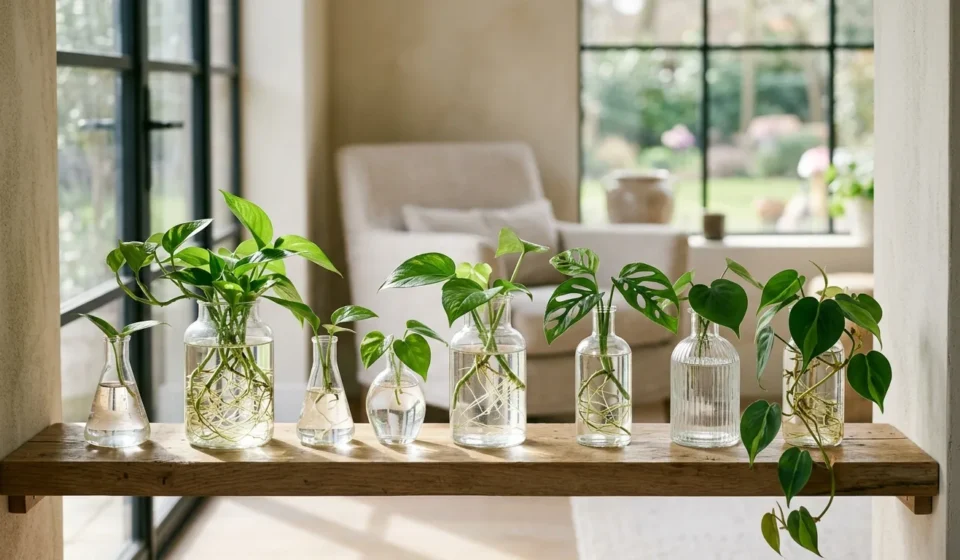
Now for the easy part! Place your prepared cuttings into your clean glass jar or vase. Fill the container with your chosen water, ensuring that at least one node (or the bottom of a Snake Plant cutting) is fully submerged. The remaining leaves should be above the waterline. Don’t crowd too many cuttings into one jar; allow them some breathing room.
Position your propagation station in a spot that receives bright, indirect light. A windowsill facing north or east, or a few feet away from a south or west-facing window, is ideal. Avoid direct, harsh sunlight, which can scorch your tender cuttings or heat the water too much. While low light might eventually yield roots, bright indirect light will significantly speed up the process.
Step 4: The Waiting Game (and How to Help It Along)
Patience is a virtue in plant propagation! You’ll typically start to see small white roots emerge from the nodes within 1-4 weeks, depending on the plant species and environmental conditions. Some plants, like Pothos, are incredibly fast, while others, like Hoyas, can take several weeks or even months.
- Change the water every 3-7 days. This prevents bacterial growth and replenishes oxygen, which is vital for root development. If you notice the water looking cloudy, change it immediately.
- Monitor for roots. Once roots are about 1-2 inches long and have started to branch, your cutting is ready to be transferred to soil.
Troubleshooting & Common Mistakes to Avoid
No Roots? Don’t Panic!
If your cuttings aren’t rooting, several factors might be at play. Is the light sufficient? Bright, indirect light is key. Is the water too cold? Room temperature is best. Is the cutting healthy? Sometimes, an unhealthy mother plant yields weak cuttings. Double-check that you’ve submerged a node, as roots won’t grow from a bare stem.
Rotting Cuttings? Here’s What Went Wrong.
But what if your cuttings start to turn mushy or black? Rot is the most common issue in water propagation. This usually happens because leaves were left submerged in the water, the water wasn’t changed frequently enough, or the cutting itself was already unhealthy. If you spot rot, remove the affected cutting immediately to prevent it from spreading to others. You can try recutting above the rotten section with a sterile blade and starting again in fresh water.
Transitioning to Soil: The Delicate Dance
Many beginners make the mistake of potting their water-rooted cuttings too soon or not handling the transition correctly. Roots that develop in water are different from roots that grow in soil; they are more fragile and accustomed to a constantly moist environment. If you pot too early (roots aren’t long enough) or don’t provide consistent moisture initially, your plant might go into shock.
Your First Potting: From Water to Soil
Once your roots are about 1-2 inches long and sturdy, it’s time for the exciting move to soil. This transition requires a little care, as the water roots are delicate and aren’t yet adapted to extracting nutrients from soil.
- Choose the Right Pot & Soil: Select a small pot, perhaps 4-6 inches in diameter, with drainage holes. Use a well-draining potting mix – a standard indoor potting mix amended with perlite or orchid bark (e.g., 60% potting mix, 20% perlite, 20% orchid bark) works wonders. This mix provides aeration and prevents waterlogging.
- Plant Gently: Create a small hole in the center of your moist potting mix. Carefully place your cutting into the hole, ensuring the roots are spread out and not bunched up. Gently backfill with soil, lightly tamping around the base to secure the plant.
- Initial Watering & Aftercare: Water thoroughly immediately after potting. For the first few weeks, keep the soil consistently moist but not soggy. The new roots are used to constant hydration, so don’t let the soil dry out completely. Placing a plastic bag loosely over the plant for a week or two can also help create a humid microclimate, aiding the transition.
- Light & Patience: Keep your newly potted plant in the same bright, indirect light conditions it enjoyed during propagation. It might experience a slight “transplant shock” and look a bit droopy for a few days, but with consistent care, it will soon perk up and start growing new leaves.
- If you’re starting propagation: Sterilize your shears, take a few healthy cuttings from your favorite vining plant (Pothos, Philodendron), ensure a node is submerged, and place them in a clean jar with fresh water in bright, indirect light.
- If you already have cuttings rooting: Check the water clarity and change it if cloudy or every 3-5 days. Observe root growth. If roots are 1-2 inches long, prepare to pot them into a small pot with well-draining soil.
From my experience, the first few weeks after potting are critical. Treat your new plant like a newborn – lots of gentle care, consistent moisture, and stable conditions. Avoid fertilizing immediately; let it settle into its new home first.
Quick “What to Do This Week” Takeaway
Water propagation is a truly satisfying way to expand your plant collection, share the joy of plants with others, and deepen your understanding of plant growth. It demystifies the process of plant multiplication, proving that you don’t need a green thumb or extensive knowledge to grow beautiful, thriving houseplants. With these simple steps, you’re well on your way to a home overflowing with vibrant, free greenery. Happy propagating!