Green Up Your Desk: Top Low-Maintenance Office Plants That Thrive Indoors

Why Plants Belong in Your Office (Beyond Just Looking Good)
Let’s be honest, office life can sometimes feel a bit… sterile. Rows of desks, computer screens, and artificial lighting aren’t exactly a recipe for zen. But what if I told you that adding a touch of green could transform your workspace into a calmer, more productive, and even healthier environment? It’s not just about aesthetics; it’s about creating a better place to work.
Table Of Content
- Why Plants Belong in Your Office (Beyond Just Looking Good)
- The Best Low-Maintenance Office Plant Heroes
- 1. Snake Plant (Sansevieria trifasciata varieties)
- 2. ZZ Plant (Zamioculcas zamiifolia)
- 3. Pothos (Epipremnum aureum varieties)
- 4. Spider Plant (Chlorophytum comosum)
- 5. Heartleaf Philodendron (Philodendron hederaceum)
- Essential Care Tips for Your Workspace Greenery
- Understanding Office Light Conditions
- The Art of Watering (or Not Watering)
- Pots and Soil: The Foundation of Health
- Common Office Plant Pitfalls & How to Avoid Them
- Your Weekly Office Plant Checklist
Research consistently shows that houseplants can significantly boost productivity, reduce stress, and even improve air quality by filtering out common toxins. Imagine Sarah, a busy marketing manager. Her desk used to be a bland collection of gadgets. Then she added a small ZZ Plant. Suddenly, her space felt calmer, more inviting, and she even found herself taking short, mindful breaks to admire it. This isn’t just wishful thinking; it’s the power of nature at work. And the best part? You don’t need a green thumb to enjoy these benefits, especially with the right easy houseplant care tips from us!
The Best Low-Maintenance Office Plant Heroes
When selecting plants for the office, low-maintenance is key. You need plants that can forgive a missed watering, tolerate less-than-ideal light, and generally just “chill out” while you focus on your tasks. Here are my top picks for thriving office plants that require minimal fuss:
1. Snake Plant (Sansevieria trifasciata varieties)
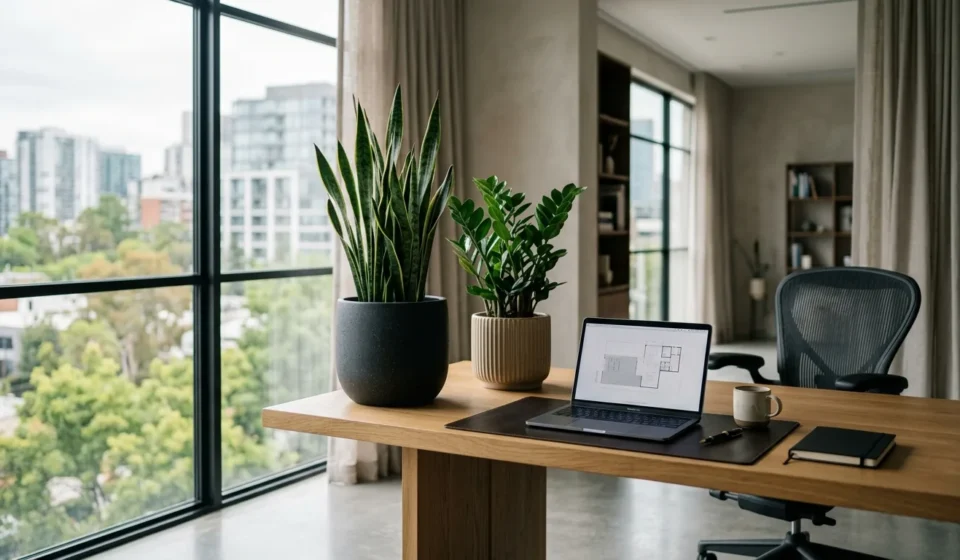
If there’s one plant that defines “indestructible,” it’s the Snake Plant. Also known as Mother-in-Law’s Tongue, these architectural beauties come in various sizes and patterns, like the popular ‘Laurentii’ with its striking yellow edges. They are incredibly tolerant of neglect, making them perfect desk plants for busy professionals.
- Light: Prefers bright indirect light but thrives in low light conditions, even fluorescent office lighting. Avoid direct, scorching sun.
- Watering: The golden rule here is to underwater rather than overwater. Allow the soil to dry out completely between waterings, usually every 2-4 weeks. In low light, this could extend to monthly.
- Why it’s great: Air purification, resilience, sculptural look, drought-tolerant.
2. ZZ Plant (Zamioculcas zamiifolia)
The ZZ Plant is another champion of neglect, boasting glossy, dark green leaves that almost look artificial. It stores water in its thick rhizomes (underground stems), making it exceptionally drought-tolerant. Seriously, you can forget about this one for weeks!
- Light: Tolerates low light brilliantly, but will grow faster and fuller in medium to bright indirect light. Avoid direct sun.
- Watering: Water thoroughly only when the soil is completely dry, typically every 3-4 weeks. If you’re unsure, wait another week.
- Why it’s great: Extreme drought tolerance, low light tolerance, pest resistant, air purifier.
3. Pothos (Epipremnum aureum varieties)
Often called the “cubicle survivor,” Pothos is famous for its trailing vines and heart-shaped leaves that come in shades of green, yellow, or white variegation. It’s incredibly forgiving and easy to propagate, so you can share the green love!
- Light: Adaptable from low to bright indirect light. Brighter light enhances variegation, while low light can make it greener.
- Watering: Water when the top 2-3 inches of soil feel dry. Pothos will tell you it’s thirsty by drooping slightly.
- Why it’s great: Versatile, air purifying, easy to propagate, forgiving of neglect.
4. Spider Plant (Chlorophytum comosum)
Spider Plants are a classic for a reason. They’re cheerful, easy to care for, and produce adorable “spiderettes” that dangle from the mother plant, perfect for propagation. Their arching leaves add a soft, natural feel to any desk.
- Light: Prefers bright indirect light but can tolerate medium light. Direct sun can scorch its leaves.
- Watering: Water when the top inch of soil is dry. They like consistent moisture but don’t want to sit in soggy soil.
- Why it’s great: Excellent air purifier, pet-friendly, easy to propagate, adds texture.
5. Heartleaf Philodendron (Philodendron hederaceum)
Similar to Pothos in its vining habit and heart-shaped leaves, the Heartleaf Philodendron is another fantastic choice for offices. It’s incredibly robust and adds a lush, tropical feel, even in less-than-ideal conditions.
- Light: Thrives in medium to bright indirect light but can tolerate low light levels.
- Watering: Water when the top 1-2 inches of soil are dry. It’s fairly forgiving if you forget a watering or two.
- Why it’s great: Beautiful foliage, air purifying, very adaptable, easy to grow.
Essential Care Tips for Your Workspace Greenery
Even the toughest plants need a little love. But for your low-maintenance office plants, “a little” truly means a little. Here’s a quick guide to keeping them happy without turning into a full-time plant parent at work:
Understanding Office Light Conditions
This is arguably the most critical factor for indoor plants for offices. Offices rarely offer abundant natural light. You’ll likely have either:
- Low Light: Far from windows, relying on fluorescent bulbs. Plants like Snake Plants and ZZ Plants are ideal here.
- Medium Light: A few feet from a window, or consistent ambient light without direct sun. Pothos, Spider Plants, and Philodendrons do well.
- Bright Indirect Light: Near a window, but with sheer curtains or where the sun doesn’t directly hit the leaves. Most plants will thrive here, but be mindful of hot afternoon sun.
But what if your cubicle is miles from any natural light? Consider a small LED grow light. They are surprisingly compact, energy-efficient, and can make a huge difference for your plant’s health, turning even the darkest corners into a suitable spot for easy houseplants.
The Art of Watering (or Not Watering)
Overwatering is the number one killer of workspace greenery. Your office plants generally need less water than those at home because office temperatures are often more stable and humidity can be lower, slowing evaporation. Always check the soil moisture before watering. A simple finger test (sticking your finger 2 inches into the soil) is usually enough. If it feels damp, wait.
For even greater accuracy, especially with larger pots, I highly recommend a moisture meter. These inexpensive tools give you a clear reading, preventing guesswork. When you do water, water thoroughly until it drains from the bottom, then empty any excess water from the saucer. Never let your plant sit in standing water, as this leads to root rot.
Pots and Soil: The Foundation of Health
For office plants, good drainage is non-negotiable. Choose pots with drainage holes. Terra cotta pots are excellent as they allow the soil to breathe and dry out faster. For soil, a standard well-draining potting mix is usually fine. If you want to go the extra mile, you can mix in some perlite (about 20-30%) to improve aeration and drainage, which is crucial for plants like ZZ and Snake Plants.
Common Office Plant Pitfalls & How to Avoid Them
Even with the hardiest plants, a few common mistakes can crop up. Being aware of them is half the battle!
- Forgetting to check for pests: Offices aren’t immune to pests. A quick wipe-down of leaves once a month with a damp cloth can help keep dust off and allow you to spot potential issues early. If you see tiny critters, a gentle neem oil spray can often solve the problem without harsh chemicals.
- Lack of humidity: Office air can be very dry, especially with air conditioning or heating. While most low-maintenance plants tolerate this, a pebble tray (a saucer with pebbles and a little water, ensuring the pot doesn’t sit in the water) can provide a small humidity boost. Misting is generally less effective and can sometimes encourage fungal issues.
- Neglecting to clean leaves: Dust accumulates quickly on office plants. Dusty leaves block sunlight and hinder photosynthesis (the process plants use to convert light into energy). A regular gentle wipe-down with a damp cloth keeps them looking their best and functioning efficiently.
- Over-fertilizing: Low-maintenance plants don’t need much fertilizer. During the active growing season (spring and summer), a balanced liquid fertilizer (like a 10-10-10) diluted to half strength, once every 4-6 weeks, is more than enough. Skip it entirely in fall and winter.
Your Weekly Office Plant Checklist
Keeping your office plants happy shouldn’t add to your workload. Here’s a simple, actionable checklist to keep your workspace greenery thriving:
- Monday Morning: Quick visual check. Are any leaves yellowing or drooping? Is the soil dry?
- Mid-Week (if needed): If the soil is bone dry, give it a drink. Use your finger or a moisture meter to confirm.
- Friday Afternoon: Before you head out for the weekend, give leaves a quick wipe with a damp cloth to remove dust. This is also a good time to check for any signs of pests.
- Monthly: If it’s spring or summer, consider a diluted feed. Rotate your plant slightly to ensure even light exposure.
Honestly, with these simple steps and the right low-maintenance plants, you’ll be amazed at how much life and vibrancy a little greenery can bring to your office. It’s an investment in your well-being that pays dividends in mood, productivity, and a more pleasant environment. So, go ahead, pick one of these resilient beauties and start transforming your desk today. Your workspace – and your stress levels – will thank you for it!