Unlock Thriving Plants: DIY Potting Mixes for Every Houseplant

Ever wondered why some of your houseplants thrive while others just… exist? Often, the unsung hero (or villain!) is right under your plant’s nose: its potting mix. Forget those one-size-fits-all bags from the garden center; crafting your own custom soil isn’t just for pros, it’s the ultimate secret weapon for vibrant, low-maintenance indoor greenery. It’s truly one of the easiest ways to elevate your plant parenting game.
Table Of Content
- Why Your Potting Mix Matters (More Than You Think)
- Essential Ingredients for Your DIY Arsenal
- The Base: Structure and Moisture Retention
- Aeration & Drainage: The Breath of Life for Roots
- Optional Amendments: Boosters for Specific Needs
- Crafting Custom Mixes for Common Houseplant Types
- All-Purpose Aroid Mix (for Monstera, Pothos, Philodendron, ZZ Plant, Syngonium)
- Super Draining Succulent & Cactus Mix (for Snake Plant, Haworthia, Euphorbia, most Cacti)
- Moisture-Loving Mix (for Calathea, Ferns, Fittonia)
- Mixing, Potting, and Common Mistakes
- How to Mix Your Soil
- Potting Up Best Practices
- Common Potting Mix Mistakes to Avoid
- Quick “What to Do This Week” Takeaway
- Frequently Asked Questions
- Why is a good potting mix important for houseplants?
- What are the key concepts for a healthy potting mix?
- What are the essential ingredients for a DIY potting mix?
- What is the role of perlite in a potting mix?
- How can I customize my potting mix for specific plants?
Here at Easy Houseplant Care, we believe everyone deserves thriving plants without complicated routines. That’s why we’re going to dive deep into making your own perfect potting mixes, turning you into a soil scientist for your beloved botanical companions. You’ll learn exactly what your plants need to flourish, from the roots up.
Why Your Potting Mix Matters (More Than You Think)
Think of your plant’s potting mix as its home, its pantry, and its breathing apparatus all rolled into one. A good mix provides crucial anchorage for roots, holds onto just enough moisture, allows for essential airflow, and offers a slow release of nutrients. Without these basic elements, even the most diligent watering and perfect light won’t save a struggling plant.
Many common houseplant problems, like yellowing leaves or root rot, often trace back to an inadequate soil environment. Generic potting mixes, while convenient, are designed to be universally ‘okay’ for a wide range of plants, but rarely ‘perfect’ for any specific one. For instance, a succulent in a dense, moisture-retentive mix is a recipe for disaster, just as a fern would struggle in a fast-draining cactus blend.
The key concepts we’ll be focusing on are well-draining soil mix and aeration. A well-draining soil mix allows excess water to escape quickly, preventing roots from sitting in stagnant water and suffocating. Aeration, or the presence of tiny air pockets in the soil, ensures roots get the oxygen they need to absorb water and nutrients efficiently. These two factors are paramount for healthy root development and overall plant vigor.
Essential Ingredients for Your DIY Arsenal
Ready to get your hands a little dirty? Building your own potting mix starts with understanding the basic components. Think of these as your building blocks, each serving a vital purpose in creating the ideal environment for your plant’s roots.
The Base: Structure and Moisture Retention
- Coco Coir: My personal favorite, this is a sustainable alternative to peat moss, made from coconut husks. It’s excellent at retaining moisture while still allowing for good airflow, and it rehydrates easily if it dries out.
- Peat Moss: A traditional choice for moisture retention and acidity, though less sustainable than coco coir. It helps create a light, fluffy texture.
- Compost or Worm Castings: These are powerhouse organic amendments that slowly release nutrients, enriching your soil and supporting beneficial microbial activity. A little goes a long way!
Aeration & Drainage: The Breath of Life for Roots
- Perlite: Those little white bits that look like Styrofoam are actually volcanic rock! Perlite is incredibly lightweight and porous, dramatically improving drainage and aeration in any mix without adding weight.
- Pumice: Similar to perlite but denser, pumice also improves drainage and aeration. It’s often preferred for heavier plants as it provides more stability.
- Orchid Bark (Fir Bark): Chunks of bark are fantastic for creating large air pockets and promoting rapid drainage, especially for epiphytic plants like orchids, anthuriums, and many aroids. It also breaks down slowly, adding long-term structure.
- Coarse Sand or Horticultural Grit: Not just any sand! This is specifically larger-grained sand (like play sand or builder’s sand, but washed) that improves drainage in succulent mixes. Avoid fine beach or play sand, which can compact and actually hinder drainage.
Optional Amendments: Boosters for Specific Needs
- Horticultural Charcoal: Helps absorb impurities and odors, and can contribute to better drainage. It’s a nice addition, especially in terrariums or for plants prone to fungal issues.
Crafting Custom Mixes for Common Houseplant Types
Now for the fun part: mixing! Remember, these are guidelines, not strict rules. Feel free to adjust slightly based on your specific environment (e.g., if your home is very humid, you might use a bit more aeration; if it’s dry, a bit more moisture retention).
All-Purpose Aroid Mix (for Monstera, Pothos, Philodendron, ZZ Plant, Syngonium)
Most popular houseplants, especially those in the aroid family, love a mix that’s rich but also incredibly airy. They want moisture, but they absolutely despise soggy feet. This mix provides excellent drainage while still holding enough hydration for their tropical needs.
- 50% High-Quality Potting Mix or Coco Coir: This forms your primary base for structure and moisture.
- 30% Perlite or Pumice: For crucial aeration and drainage.
- 20% Orchid Bark: Provides larger air pockets, mimicking their natural epiphytic environment, and adds long-term structure.
- Optional: A handful of worm castings for a nutrient boost.
This mix is fantastic for plants like Monstera deliciosa, Pothos varieties, Philodendron hederaceum, and even a resilient ZZ Plant. It’s forgiving and promotes strong root development.
Super Draining Succulent & Cactus Mix (for Snake Plant, Haworthia, Euphorbia, most Cacti)
These desert dwellers are masters of water storage and absolutely demand fast-draining, gritty soil. Water should run straight through the pot in seconds, not sit around. If you’ve ever had a succulent rot, chances are its soil was the culprit.
- 40% High-Quality Potting Mix or Coco Coir: Just enough to provide some structure and minimal moisture retention.
- 30% Perlite or Pumice: For excellent drainage and aeration.
- 30% Coarse Sand or Horticultural Grit: This is key for that gritty, super-fast drainage these plants crave.
This mix is perfect for Sansevieria trifasciata (Snake Plant), various cacti, Echeveria, Sedum, and other succulents. You’ll water more frequently, but the risk of root rot plummets. For example, imagine you’ve got a beautiful Snake Plant ‘Laurentii’ that suddenly starts getting mushy at the base despite infrequent watering. The problem almost certainly lies with a soil mix that’s holding onto too much moisture for too long.
Moisture-Loving Mix (for Calathea, Ferns, Fittonia)
Some tropical beauties, like the notoriously dramatic Calathea orbifolia or delicate ferns, prefer a consistently moist (but never soggy!) environment. This mix balances moisture retention with just enough aeration to prevent compaction.
- 60% High-Quality Potting Mix or Coco Coir: The bulk of the mix for moisture retention.
- 20% Perlite or Pumice: To ensure aeration and prevent the mix from becoming too dense.
- 20% Worm Castings or Compost: These plants appreciate the extra organic matter and slow-release nutrients to fuel their lush foliage.
This blend works wonders for plants that prefer their soil to stay lightly damp, but still breathe. You’ll find yourself watering less frequently than with a standard mix, but more often than with a succulent blend.
Mixing, Potting, and Common Mistakes
Making your own mix is simple, but there are a few best practices to ensure success.
How to Mix Your Soil
- Gather Your Ingredients: Lay out all your chosen components.
- Measure: Use a scoop or a small container to measure out your percentages. Eyeballing is fine once you get the hang of it!
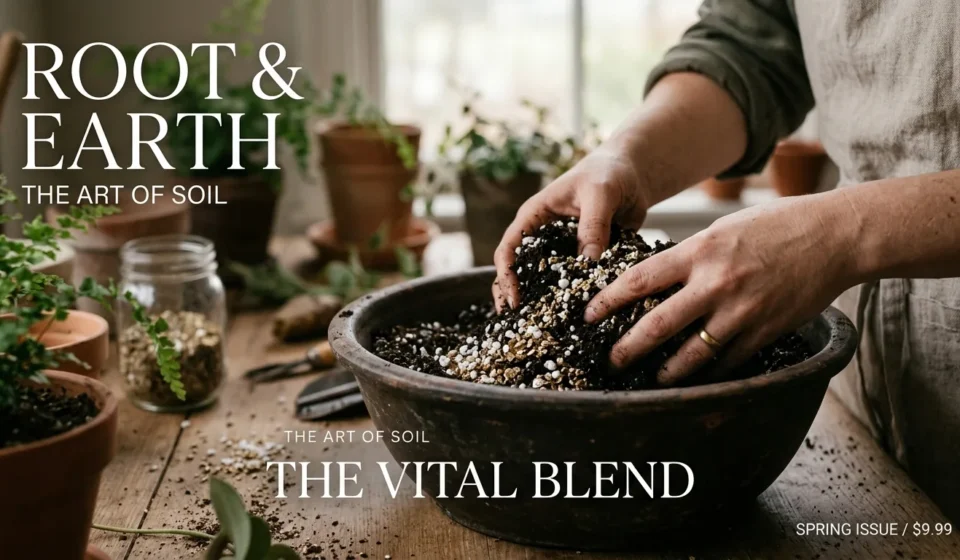
- Mix Thoroughly: In a large bin or bucket, combine all ingredients. Use your hands (wearing gloves, if you prefer) to really work everything together until it’s uniform. You want to see an even distribution of all components.
- Slightly Dampen (Optional): Some people like to slightly dampen the mix before potting, especially if using coco coir, as it can be dusty when dry. This also helps it settle better in the pot.
Potting Up Best Practices
When you’re ready to repot, always choose a pot with drainage holes. A pot that’s only 1-2 inches larger in diameter than the previous one is usually sufficient. Overpotting can lead to the soil staying wet for too long, as the plant’s roots won’t be able to absorb all the moisture in the larger volume of soil. Gently loosen any circling roots, center your plant, and fill with your custom mix, leaving about an inch of space from the rim.
Common Potting Mix Mistakes to Avoid
- Using Garden Soil: Never, ever use soil from your outdoor garden for houseplants. It’s too dense, contains outdoor pests, and doesn’t drain properly in a pot.
- Not Mixing Thoroughly: If ingredients aren’t evenly distributed, you’ll have inconsistent drainage and aeration within the pot.
- Compacting the Soil: While you want to gently firm the soil around your plant, don’t press it down too hard. This will reduce aeration and impede drainage.
- Ignoring Plant-Specific Needs: The biggest mistake is treating all plants the same. A succulent won’t thrive in a fern mix, and vice-versa. But what would you do if your plant’s leaves start turning yellow despite perfect watering? Chances are, you need to check that soil!
Quick “What to Do This Week” Takeaway
This week, pick one houseplant that could use a boost. Gather the necessary ingredients and mix up a custom batch of soil designed specifically for its needs. Repot it, water it in, and observe the difference!
Honestly, once you start making your own potting mixes, you’ll never go back. It gives you so much control over your plants’ health and vigor, and it’s incredibly satisfying to see them thrive in a habitat you’ve custom-made. I believe you’ll notice a dramatic difference in growth, fewer pest issues, and significantly reduced stress for both you and your plants. Happy mixing, fellow plant parent!
Frequently Asked Questions
Why is a good potting mix important for houseplants?
A good potting mix provides crucial anchorage for roots, holds onto just enough moisture, allows for essential airflow, and offers a slow release of nutrients. Without these basic elements, even the most diligent watering and perfect light won't save a struggling plant. Many common houseplant problems, like yellowing leaves or root rot, often trace back to an inadequate soil environment.
What are the key concepts for a healthy potting mix?
The key concepts for a healthy potting mix are well-draining soil mix and aeration. A well-draining soil mix allows excess water to escape quickly, preventing roots from sitting in stagnant water and suffocating. Aeration, or the presence of tiny air pockets in the soil, ensures roots get the oxygen they need to absorb water and nutrients efficiently.
What are the essential ingredients for a DIY potting mix?
The essential ingredients for a DIY potting mix include a base for structure and moisture retention, such as coco coir or peat moss, and ingredients for aeration and drainage, such as perlite, pumice, or orchid bark. Compost or worm castings can also be added as organic amendments to slowly release nutrients and support beneficial microbial activity.
What is the role of perlite in a potting mix?
Perlite is a lightweight and porous volcanic rock that dramatically improves drainage and aeration in a potting mix. It allows excess water to escape quickly, preventing roots from sitting in stagnant water and suffocating, and provides roots with the oxygen they need to absorb water and nutrients efficiently.
How can I customize my potting mix for specific plants?
You can customize your potting mix for specific plants by choosing ingredients that meet their specific needs. For example, succulents require a fast-draining mix, while ferns prefer a more moisture-retentive mix. You can also add optional amendments, such as horticultural charcoal, to boost specific needs like odor control or improved drainage.