Decoding Your Houseplant’s Light Needs: A Guide to Thriving Indoor Greenery

Why Light is the Lifeblood of Your Houseplants
Ever wondered why some plants just *thrive* in your home, bursting with new leaves and vibrant color, while others seem to slowly decline, no matter how perfectly you water them? More often than not, the answer lies in something fundamental: light. Just like we need food to survive, plants need light to create their own food through a magical process called photosynthesis. Without the right amount and type of light, even the best watering schedule or the richest soil mix won’t save your plant.
Table Of Content
- Why Light is the Lifeblood of Your Houseplants
- Understanding the Language of Light: Bright, Medium, and Low
- Bright Indirect Light: The Gold Standard
- Medium Light: The Happy Middle Ground
- Low Light: Tolerant, Not Light-Free
- Direct Sun: For Sun Worshippers Only
- Becoming a Light Detective: Assessing Your Home’s Zones
- Common Light Mistakes & How to Fix Them
- Mistake #1: “Low Light” Means “No Light”
- Mistake #2: Ignoring Your Plant’s Signals
- Mistake #3: Not Rotating Your Plants
- Optimizing Light for Every Plant (and When to Use Grow Lights)
- What to Do This Week: Your Light Homework!
Getting light right is arguably the single most important factor for houseplant success. It dictates everything from growth speed and leaf size to flowering and overall plant health. But what does “right light” even mean? It’s not just about pointing a plant at a window; it’s about understanding the nuances of different light levels and matching them to your plant’s specific needs. Honestly, once you crack the code of light, you’ll feel like a true plant whisperer!
Understanding the Language of Light: Bright, Medium, and Low
When you read a plant tag that says “bright indirect light” or “tolerates low light,” it can feel like a secret language. Let me break down these common terms so you can confidently place your plants where they’ll truly flourish.
Bright Indirect Light: The Gold Standard
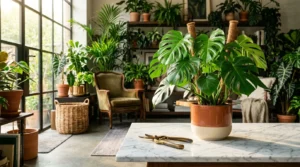
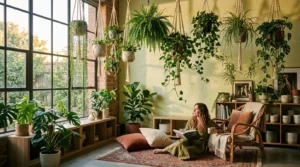
This is the holy grail for most popular houseplants, and for good reason. Bright indirect light means your plant receives plenty of illumination, but no direct sunbeams hit its leaves for extended periods. Think of it as standing in the shade on a very sunny day – it’s bright, but you’re not getting a sunburn. This is typically found near a north or east-facing window, or a few feet back from a south or west-facing window where the intense direct sun is diffused by sheer curtains or a nearby building.
- Perfect for: Monstera deliciosa, Pothos, Philodendron, ZZ Plant (for faster growth), Snake Plant (for faster growth), Fiddle Leaf Fig, Peace Lily, Calathea, Prayer Plant.
Medium Light: The Happy Middle Ground
Medium light is a step down from bright indirect. It’s still a well-lit area, but perhaps further away from a window, or in a room with windows that don’t receive intense light. Plants in medium light will still grow well, but often a bit slower than their counterparts in bright indirect conditions. It’s often where plants are placed in the middle of a room, or near a window that gets limited natural light.
- Perfect for: Most Pothos varieties, Philodendron hederaceum, ZZ Plant, Snake Plant, Dracaena species, Aglaonema (Chinese Evergreen).
Low Light: Tolerant, Not Light-Free
This is where many new plant parents get confused. Low light does *not* mean “no light.” It means your plant can tolerate dimmer conditions, such as a corner further from a window, or a room with only small windows. Plants in low light will survive, but their growth will be significantly slower, and they might not produce as many new leaves or vibrant colors. They still need *some* light to perform photosynthesis, however minimal. I often tell people to think of it like eating just enough to stay alive, but not enough to thrive.
- Perfect for: ZZ Plant, Snake Plant (Sansevieria), Cast Iron Plant (Aspidistra elatior), Pothos (will get leggy), Philodendron hederaceum (will get leggy).
Direct Sun: For Sun Worshippers Only
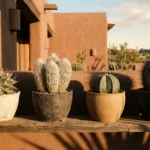
While most houseplants prefer indirect light, some actually *crave* direct sun. Direct sun means unfiltered sunlight hitting the plant’s leaves for several hours a day. This is typically found right in front of a south or west-facing window. For plants not adapted to it, direct sun can cause scorched, crispy leaves. But for the right plants, it’s exactly what they need!
- Perfect for: Cacti, most Succulents, some specific varieties of Aloe.
Becoming a Light Detective: Assessing Your Home’s Zones
Now that you know the definitions, how do you figure out what kind of light *your* home offers? It’s all about becoming a light detective. The most critical tools are your eyes and a simple test.
First, consider your window directions:
- North-facing windows: Offer consistent, gentle, indirect light all day. Rarely too intense. Great for most plants needing bright indirect light.
- East-facing windows: Provide soft, direct morning sun for a few hours, then indirect light for the rest of the day. Excellent for many plants that appreciate a bit of gentle direct sun or bright indirect light.
- South-facing windows: Deliver intense, direct sunlight for most of the day. Ideal for cacti and succulents. For other plants, you’ll need to diffuse the light with sheer curtains or move them several feet back.
- West-facing windows: Offer intense, direct afternoon sun. This can be very hot and harsh. Similar to south-facing, most plants will need protection or to be placed further away.
But how do you *really* know what kind of light a specific spot offers? The shadow test is your secret weapon. Place your hand or a white piece of paper where you intend to put your plant, around midday on a bright day. Observe the shadow:
- Bright Indirect Light: A soft, slightly blurry, but still discernible shadow.
- Medium Light: A faint, hazy shadow, barely there.
- Low Light: Virtually no discernible shadow at all.
- Direct Sun: A crisp, distinct, dark shadow.
For example, imagine this situation: You’ve got a beautiful new Monstera deliciosa, and you know it needs bright indirect light. You eye up a spot 10 feet from your south-facing window. You perform the shadow test and find almost no shadow. Even though the window is “bright,” the light intensity drops off *drastically* the further you move from the source. That Monstera would be starving for light in that spot! You’d need to move it much closer, or perhaps to an east-facing window.
Common Light Mistakes & How to Fix Them
Even experienced plant parents can stumble when it comes to light. Here are a few common pitfalls I’ve seen over the years and how to avoid them.
Mistake #1: “Low Light” Means “No Light”
As we discussed, this is the biggest misconception. No plant can survive in absolute darkness. If your plant is in a truly dark corner, it will eventually decline, no matter how “low light tolerant” it is. Fix: Even low light plants need *some* ambient light. Try to find a spot that gets at least indirect light for a few hours a day, or consider supplementing with a grow light.
Mistake #2: Ignoring Your Plant’s Signals
Your plants are constantly communicating their needs! Are the leaves stretching awkwardly towards a window (etiolation)? That’s a sign of insufficient light. Are they pale, yellowing, or losing variegation? Also often a sign of too little light. Are the leaves crisp, brown, or scorched with distinct brown spots? That’s usually too much direct sun. Fix: Pay attention! Adjust your plant’s location immediately based on its symptoms. It’s often easier to move a plant than to guess what’s wrong.
Mistake #3: Not Rotating Your Plants
Plants grow towards their light source. If you never rotate your plant, one side will become lush and full, while the other side stretches and becomes sparse. Fix: Make it a habit to rotate your plants a quarter turn every week or two. This encourages even growth and keeps your plant looking balanced and beautiful.
Optimizing Light for Every Plant (and When to Use Grow Lights)
Once you’ve diagnosed your home’s light zones, you can actively optimize your plants’ environments. It’s all about making smart choices and sometimes, a little help from technology.
Here are some actionable tips:
- Clean Your Windows and Leaves: Dusty windows block light. Dusty leaves prevent your plant from absorbing light efficiently. A quick wipe down of both can make a surprising difference!
- Use Sheer Curtains: If you have a south or west-facing window but want to grow plants that prefer bright indirect light, sheer curtains are your best friend. They diffuse the intense direct sun, creating the perfect environment.
- Embrace Grow Lights: For truly dim spaces, or during dark winter months, grow lights are a game-changer. They provide the full spectrum of light plants need for photosynthesis. Look for LED full-spectrum grow lights. They’re energy-efficient and don’t produce excessive heat.
When using a grow light, remember that distance matters. Typically, you’ll want to place the light 6-12 inches above your plant, depending on the light’s intensity and the plant’s needs. Start further away and move closer if your plant shows signs of stretching. Grow lights often run for 12-14 hours a day to simulate natural daylight cycles.
What to Do This Week: Your Light Homework!
This week, take a walk through your home and observe the light. Perform the shadow test in different rooms and at various distances from your windows. Note down which spots get bright indirect light, medium light, and low light. Then, compare these findings to the light requirements of your existing plants. Don’t be afraid to move a plant or two if you realize they’re in the wrong spot. You might be amazed at the difference a simple relocation can make!
Understanding and providing the right houseplant light is the foundation for a thriving indoor jungle. It’s an investment in your plants’ health that pays off in lush foliage and vibrant growth. With these tips, you’re well on your way to becoming a light master, ensuring your plants are always living their best, brightest lives!