
Why Office Plants Are a Game Changer (Beyond Just Greenery)
Let's be honest, staring at a screen all day can feel a bit sterile. We all crave a touch of nature, especially when deadlines loom and the coffee just isn't cutting it anymore. Bringing plants into your office or workspace isn't just about aesthetics; it's about creating a healthier, happier, and more productive environment. From filtering out common indoor air pollutants to boosting your mood and even enhancing focus, the benefits are truly remarkable.
Imagine this situation: You're halfway through a tough report, feeling a bit foggy, then you glance over at a vibrant green leaf. That small, natural connection can actually reduce stress and improve cognitive function. Studies have shown that plants can increase productivity by up to 15%! So, if you've been on the fence about adding a bit of green to your desk, consider this your nudge from a fellow plant enthusiast. The good news? You don't need a green thumb or a complicated routine to enjoy these perks.
Choosing Your Green Office Companion: Key Considerations
Before you rush out and grab the first pretty plant you see, let's talk strategy. An office environment often presents unique challenges: fluctuating temperatures, artificial lighting, and sometimes, a forgotten plant over a long weekend. The key is to pick plants that are inherently resilient and don't demand constant attention. As an experienced plant parent, I've learned that understanding a plant's basic needs for light, water, and space is paramount to its success.
Light Levels: Decoding Your Workspace
This is perhaps the most critical factor. What kind of light does your office get? Is there a window? Is it north, south, east, or west-facing? Or are you relying solely on fluorescent lights? Most office plants prefer bright indirect light, which means plenty of light without direct sunbeams hitting the leaves, which can scorch them. A spot a few feet away from a sunny window or right next to an east or north-facing window is usually ideal. For low-light situations, don't despair! There are still fantastic options that can tolerate minimal natural light, surviving happily under standard office lighting.
Watering Habits & Your Schedule
Are you someone who remembers to water every week, or are you more of a "when I remember" type? For office plants, particularly those chosen for their low-maintenance nature, less is often more. We're looking for plants that prefer their soil to dry out between waterings, reducing the risk of fatal overwatering (which is the number one plant killer, in my opinion!). A simple moisture meter can be your best friend here, taking the guesswork out of watering by telling you exactly how wet the soil is.
Space & Potting
Consider the available space on your desk, shelf, or floor. Do you need something compact, or do you have room for a larger statement piece? For most office settings, a compact pot in the 4-8 inch diameter range is perfect. Ensure your pot has drainage holes at the bottom to prevent water from accumulating and causing root rot. A simple saucer underneath will catch any excess water, keeping your desk tidy. If you're working with limited square footage at home too, our compact houseplants for small spaces guide has more ideas.
Our Top Picks: The Unkillable Office Plant Squad
Alright, let's get to the good stuff! Based on years of experience, these are the plants I consistently recommend for busy office environments. They are tough, forgiving, and incredibly rewarding.
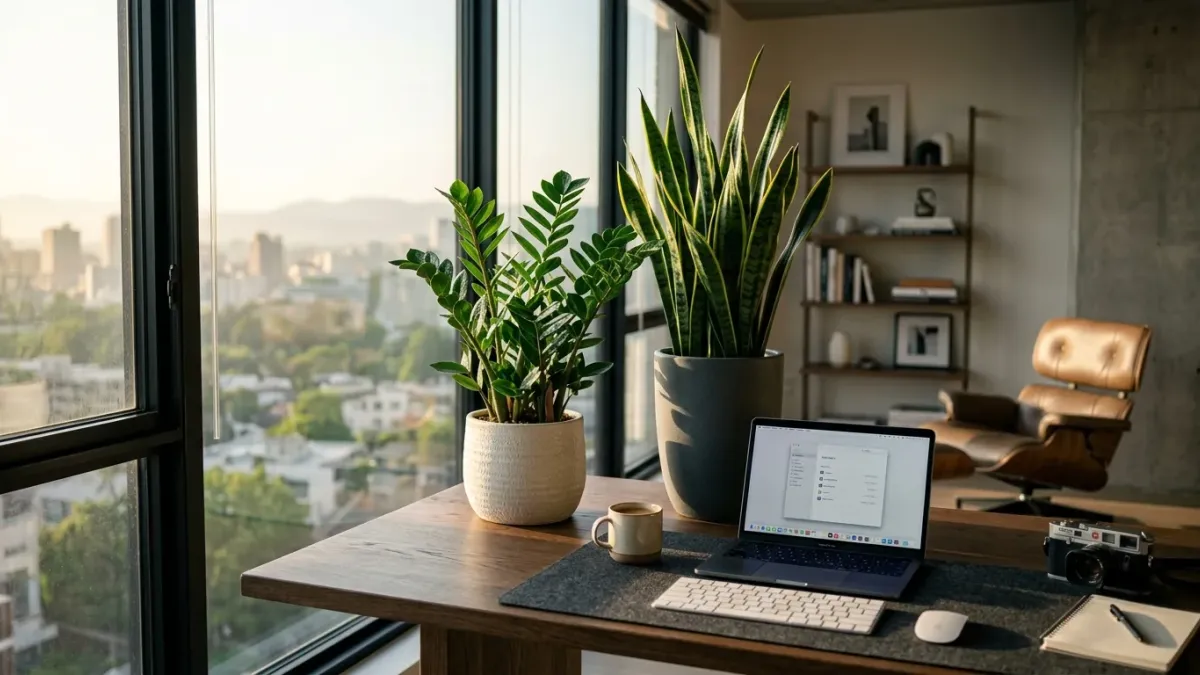
1. Snake Plant (Sansevieria trifasciata)
- Why it's great: The ultimate low-maintenance champion. Snake Plants are virtually indestructible, tolerating low light, irregular watering, and even a bit of neglect. Plus, they're excellent at purifying the air, removing toxins like formaldehyde and benzene.
- Care tips: Water only when the soil is completely dry – I'm talking bone dry, usually every 2-4 weeks. They thrive in bright indirect light but will happily tolerate very low light conditions. The 'Laurentii' variety with its yellow-edged leaves is particularly striking. Just be careful not to overwater!
2. ZZ Plant (Zamioculcas zamiifolia)
- Why it's great: Another superstar for forgetful waterers and low-light spaces. ZZ Plants store water in their thick rhizomes (underground stems), making them incredibly drought-tolerant. Their glossy, dark green leaves add a sophisticated touch to any desk.
- Care tips: Water even less frequently than a snake plant – perhaps once a month or every 6 weeks, or until the soil is totally dry. They do well in low to medium indirect light. The newer 'Raven' variety with its near-black foliage is a real showstopper.
3. Pothos (Epipremnum aureum)
- Why it's great: Known as the "Devil's Ivy" because it's so hard to kill! Pothos plants are incredibly versatile, tolerating a wide range of light conditions and bouncing back quickly even if you forget to water them for a while. Their trailing vines look fantastic on shelves or hanging baskets.
- Care tips: Water when the top 2-3 inches of soil feel dry to the touch, roughly every 7-10 days depending on light. They prefer medium to bright indirect light but can survive in lower light, though their variegation might become less pronounced. If leaves start to yellow, you might be overwatering; if they droop, it's time for a drink!
4. Spider Plant (Chlorophytum comosum)
- Why it's great: These classic houseplants are incredibly forgiving and known for their air-purifying qualities. They produce "spiderettes" (baby plants) that dangle from the mother plant, making them fun to propagate and share with colleagues!
- Care tips: Keep the soil consistently moist but never soggy. Water when the top inch of soil feels dry, typically once a week. They prefer bright indirect light but can adapt to lower light. If the tips of the leaves turn brown, it might be due to low humidity or chemicals in tap water; try filtered water if possible.
5. Peace Lily (Spathiphyllum)
- Why it's great: Elegant and graceful, Peace Lilies are known for their beautiful white "flowers" (actually modified leaves called spathes) and dark green foliage. They are excellent air purifiers and visibly tell you when they need water by dramatically drooping, making them very communicative!
- Care tips: Peace Lilies prefer consistently moist soil, so water when the top inch of soil is dry or when you see those tell-tale droopy leaves. They do best in medium to low indirect light. Avoid direct sunlight as it can scorch their leaves. Once watered, they perk right back up, which is incredibly satisfying to witness!

Easy Care Tips for a Thriving Office Jungle
So far we've covered which plants are best for the office. Now let's get to the really critical point: keeping them alive and thriving with minimal effort. Remember, the goal here is "easy houseplant care," not complicated horticulture!
Watering Wisdom
My golden rule: check the soil before you water. Stick your finger 1-2 inches deep into the soil. If it feels dry, it's probably time for a drink. If it's still damp, wait a few more days. A good watering involves soaking the soil thoroughly until water drains out of the bottom of the pot, then emptying any excess from the saucer. This ensures the entire root ball gets hydrated. For office plants, particularly those like Snake Plants and ZZs, it's almost always better to underwater slightly than to overwater. Our easy guide to watering houseplants has more troubleshooting tips.
Light Adjustments
Even if you've placed your plant perfectly, conditions can change. Is the window now blocked by a new filing cabinet? Did the seasons change? Observe your plant. If it's stretching towards the light, it might need a brighter spot. If the leaves are looking pale or scorched, it might be getting too much direct sun. Don't be afraid to move your plant around until you find its happy place.
Basic Fertilization (Less is More)
For low-maintenance office plants, fertilization is often an afterthought, which is fine! These plants don't demand much. If you want to give them a boost, a balanced liquid fertilizer (like a 10-10-10) diluted to half strength, once every 2-3 months during the spring and summer growing season, is more than enough. Skip it entirely in fall and winter when growth naturally slows.
Quick Pest Checks
Once a month, take a quick peek under the leaves and along the stems for any signs of pests like tiny webs (spider mites) or sticky residue (mealybugs). Catching issues early is key. If you spot something, a simple wipe with a damp cloth or a spray of diluted neem oil usually does the trick.
Common Office Plant Blunders to Avoid
Even with the hardiest plants, mistakes happen. But what would you do in this situation? Here are the most common pitfalls I've seen in office settings and how to steer clear of them.
<ul>Quick "What to Do This Week" Takeaway:
This week, take five minutes to check the soil moisture of your office plants. If the top few inches are dry, give them a good drink until water runs out the bottom. If they're still damp, just leave them be. Also, take a moment to rotate your plants a quarter turn to ensure even growth and light exposure.
Bringing nature into your workspace doesn't have to be a chore; it should be a joy. With these resilient plant choices and straightforward care tips from Easy Houseplant Care, you can effortlessly create a vibrant, healthy, and more inspiring office environment. Pick your favorite green companion, give it a little love, and watch your workspace – and your well-being – flourish. You've got this!