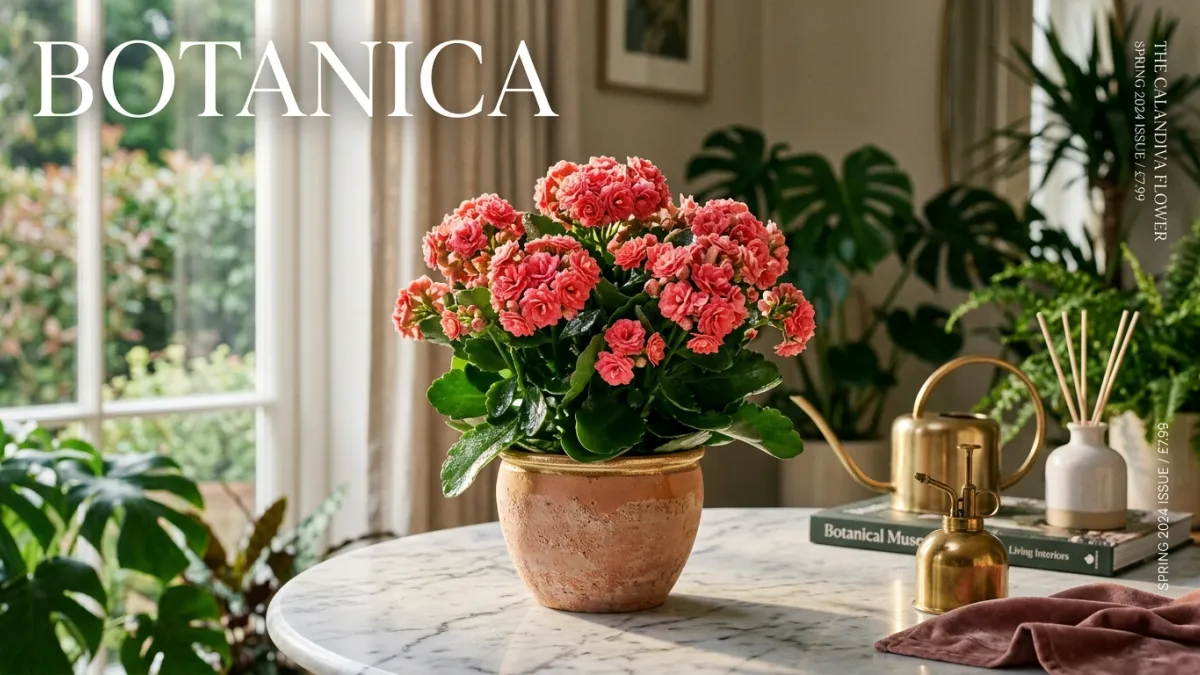
Quick answer: To keep a Calandiva thriving, provide bright indirect sunlight, allow the top 2 inches (5 cm) of soil to dry out completely between waterings, and keep the plant in a well-draining succulent soil mix. Getting a Calandiva to rebloom requires a forced dormancy period of 6 weeks with 14 hours of daily uninterrupted darkness during autumn.
Understanding Calandiva Lighting and Environmental Needs
Calandiva plants inherit their structural biology from the succulent family Crassulaceae, which means light intensity directly dictates their health and leaf density. To flourish indoors, your plant needs approximately 800 to 1,500 foot-candles (roughly 8,600 to 16,000 lux) of light daily. Placing your pot near an east-facing window gives it gentle morning rays, while a south- or west-facing window sheltered by a sheer curtain protects the fleshy foliage from midday scorch. If you notice the stems stretching out and becoming leggy, your plant is signaling that it needs a brighter position.
Temperature control is equally straightforward yet vital for bud development. Calandivas thrive in standard household ranges between 65°F and 75°F (18°C to 24°C) during the daytime. Nighttime temperatures can drop safely to 60°F (15°C), which actually mimics their native Malagasy foothill climate and encourages sturdy stem growth. Keep your plants safely clear of cold drafts near exterior doors during winter nights, as exposure to temperatures below 50°F (10°C) causes immediate tissue softening and cold shock.
Unlike delicate tropical foliage plants like Calathea orbifolia, Calandiva plants prefer moderate to dry indoor air. Average home humidity levels between 30% and 50% are ideal. High humidity coupled with stagnant air increases the risk of powdery mildew on the dense flower clusters. You never need to mist a Calandiva; doing so traps moisture against the thick leaves, creating an breeding ground for fungal pathogens.
Watering, Soil Mix, and Potting Requirements
The fastest way to ruin a healthy Calandiva is overwatering. As fleshy succulents, their thick leaves store ample water reserves to endure dry spells. Always check moisture levels manually rather than following a rigid calendar. Insert your finger or an analog moisture meter into the pot; water only when the top 2 inches (5 cm) of soil feel bone-dry. During peak summer growth, this usually translates to watering every 10 to 14 days, whereas winter dormant periods may stretch watering intervals out to every 3 to 4 weeks.
When you do water, soak the plant thoroughly using room-temperature tap or filtered water until liquid runs freely through the drainage holes. Always drain any excess water out of the saucer after 15 minutes. Allowing the roots to sit in trapped water starves them of oxygen, rapidly causing root rot and leaf dropping. Bottom-watering is another excellent approach: submerge the pot base in 2 inches of water for 20 minutes, allowing capillary action to moisten the roots without wetting the lower leaves.
Drainage starts with proper soil composition. Standard peat-based potting soil holds onto water for too long for succulent root systems. Create a custom substrate that mimics open, coarse terrain by mixing basic indoor potting soil with gritty drainage aids. Repot every 1 to 2 years during early spring, moving up just one pot size (an increase of about 2 inches or 5 cm in diameter) to prevent excess wet soil from lingering around the roots.
Plant parent tip: If the deep green leaves on your Calandiva start looking dull, soft, or slightly wrinkled, do not automatically reach for the watering can. Soft leaves can mean underwatering, but they also happen when roots rot from overwatering and lose the ability to draw up moisture. Always check the soil deep down with a wooden chopstick before adding water. If the stick comes out moist or muddy, leave the plant alone to dry out.
| Care Parameter | Optimal Target for Calandiva | Signs of Stress / Problem |
|---|---|---|
| Light Level | Bright indirect (800–1,500 foot-candles / 6-8 hrs) | Leggy stems (too dim); scorched red leaves (too hot) |
| Watering | Allow top 2 inches (5 cm) to dry out fully | Mushy, yellow leaves (overwatered); wrinkling (underwatered) |
| Soil Composition | 50% Potting Mix + 30% Perlite + 20% Orchid Bark | Soil stays wet over 7 days; slow root growth |
| Fertilizer | Balanced 10-10-10 (half-strength every 4 weeks) | Salt build-up on pot rim; pale upper foliage |
The Reblooming Protocol: Step-by-Step Dark Treatment
Most plant owners throw away their Calandiva once the original flower heads fade, assuming the display is a one-time affair. However, Calandivas are photoperiodic plants, meaning their flowering mechanism is triggered by shorter day lengths. Once the original blooms wither, trim off the spent flower stalks right down to the main leaf node using clean, sharp pruning shears. This diverts vital energy away from seed production and back into strong leaf and root growth.
To force your plant to produce a fresh flush of rose-like blooms, you must provide a strict dark-treatment schedule for 6 consecutive weeks during fall or winter. Beginning in late September or October, place your plant in completely continuous darkness for 14 hours every night (for instance, from 6:00 PM to 8:00 AM). You can achieve this by placing the pot inside a dark closet or placing a thick, light-proof cardboard box over it. During the remaining 10 hours of daylight, move the plant back to its bright sunny window.
Consistency is key during this dormant trigger period. Even a brief flash of light from a hallway bulb during the 14-hour dark period can reset the plant's internal clock and delay blooming. Reduce watering significantly during these 6 weeks, providing just enough to keep the leaves plump. Once small green flower buds emerge along the stem tips, discontinue the dark treatment and return the plant to its normal bright spot. Within 4 to 6 weeks, your Calandiva will burst into full bloom once again.
Fertilization, Propagation, and Common Pest Control
Feeding your Calandiva correctly keeps its thick leaves glossy and supplies essential phosphorus for blooming. Feed the plant once every 4 weeks during its spring and summer growing phase using a balanced liquid fertilizer diluted to half strength (such as a standard 10-10-10 or 5-10-5 formulation). Stop fertilizing completely during late autumn and throughout the reblooming treatment. Over-fertilizing leads to mineral salt build-up in the soil, which burns delicate root tips and causes leaf edges to turn crisp and brown.
Propagating a healthy Calandiva is quick, easy, and virtually foolproof using stem cuttings. Snip a healthy stem section roughly 3 to 4 inches long with at least two pairs of leaves. Strip off the lower leaves and allow the cut tip to dry on a paper towel for 24 to 48 hours until a dry callus forms over the wound. Callusing prevents soil-borne bacteria from entering the cut tissue. Insert the callused end into a small pot filled with damp perlite or cactus soil. Roots typically form within 14 to 21 days at room temperature.
While generally resilient, indoor Calandivas can occasionally attract opportunistic pests like mealybugs and aphids, which nestle inside the tight flower clusters. Check leaf undersides and stem joints weekly for white, cotton-like webs or sticky residue. Treat mild infestations immediately by wiping affected areas with a cotton swab dipped in 70% isopropyl alcohol, or spray the whole plant thoroughly with an organic neem oil mix or insecticidal soap. Keep affected plants isolated from other common indoor species, such as your Pothos or Snake Plant collection, to prevent pests from spreading.
Common Calandiva Care Mistakes to Avoid
- Leaving pots in standing water: Keeping excess run-off water inside decorative outer sleeves rots succulent roots fast. Always empty saucers 15 minutes after watering.
- Skipping the callusing stage during propagation: Planting freshly cut succulent stems directly into damp soil frequently leads to stem rot before roots can form.
- Exposing plants to erratic night lighting: Leaving artificial living room lights on late into the evening during fall prevents natural flower bud development.
- Over-potting into massive containers: Excess soil volume holds onto moisture for weeks, creating ideal conditions for root disease. Only step up pot sizes by 2 inches (5 cm) at a time.
- Ignoring pet safety precautions: Keeping plants within reach of pets can be dangerous. Kalanchoe species contain cardiac glycosides, which are toxic to dogs and cats if chewed on.
Your Weekly Calandiva Maintenance Checklist
Taking care of your Calandiva doesn't need to be complicated or time-consuming. Keep your plant looking vibrant year-round by running through this simple weekly check: rotate the pot a quarter-turn toward the window light to encourage even, upright foliage growth. Feel the top 2 inches of soil; if it feels completely dry, give it a deep, thoroughly draining soak. Snip off any dead leaves or wilted blossoms near the base to maintain air circulation, and check leaf joints for early signs of mealybugs. If you follow these basic steps, your Calandiva will remain a long-lasting highlight of your indoor garden.
Frequently Asked Questions
Is the Calandiva plant safe for homes with cats and dogs?
No, Calandiva plants belong to the Kalanchoe genus, which contains naturally occurring cardiac glycosides. These compounds are toxic to cats and dogs if ingested, causing symptoms like drooling, vomiting, diarrhea, or irregular heart rhythms. Keep your plant placed safely out of reach on high shelving or plant stands.
Why are my Calandiva leaves turning yellow and mushy?
Yellow, soft, or mushy leaves are almost always caused by overwatering or soil that drains too slowly. When succulent roots sit in soggy conditions, they rot and can no longer transport oxygen. Allow the soil mix to dry out thoroughly between waterings, and make sure your pot has functional drainage holes.
How long do Calandiva flowers typically last on the plant?
Individual bloom cycles are exceptionally long-lasting compared to most indoor flowering plants. A well-cared-for Calandiva will stay in full bloom for 6 to 8 weeks continuously. Trimming spent flowers encourages secondary side shoots to produce smaller late-season blossoms.
Can I keep my Calandiva outdoors during the summer months?
Yes, Calandivas enjoy spending summer outdoors on a covered patio or balcony once nighttime temperatures remain consistently above 60°F (15°C). Place the pot in a sheltered spot that receives indirect sunlight or gentle morning sun, and bring it back indoors before cool autumn night temperatures arrive.