
Unlock the Secret to Greenery in Dim Spaces
Ever gazed at a dimly lit corner of your apartment or office and wished you could bring some life into it? You’re not alone! Many plant lovers believe that a lack of bright, sunny windows means a lack of houseplants. But I'm here to tell you that's simply not true. As an experienced indoor gardener, I've transformed countless low-light areas into thriving green sanctuaries, and you can too.
The key isn't to force sun-loving plants into the shadows; it's to choose the right plants that naturally flourish in less-than-ideal lighting conditions. On Easy Houseplant Care, we're all about making plant parenting simple and successful. So, let's dive into the wonderful world of low-light tolerant houseplants and discover how you can keep them happy, healthy, and vibrant without complicated routines.

Understanding "Low Light": What Does It Really Mean for Your Plants?
Before we introduce our green heroes, it's crucial to clarify what "low light" actually means in the houseplant world. It's not the same as "no light." All plants need some light to perform photosynthesis – the process where they convert light energy into food. However, some are far more efficient at it than others, making them perfect candidates for dimmer spots. For a complete breakdown of how different light levels affect every stage of plant growth, see our full houseplant light requirements guide.
Defining Different Light Levels
When plant care guides mention light, they usually refer to three main categories: bright indirect, medium, and low. Bright indirect light typically means a spot near a window that gets plenty of ambient light but no direct sun rays hitting the leaves. Think of a north-facing window, or a few feet back from an east or west-facing window. Medium light is usually a bit further from a bright window, or in a room with a decent window but maybe with some obstructions outside. Low light refers to areas that receive minimal natural light, such as a corner far from any window, a room with only small windows, or an office cubicle. This could mean a spot where you can read a book comfortably without artificial light, but it's noticeably dimmer than a bright room.
For example, imagine this situation: you have a window that gets direct sun for a few hours in the morning. A plant placed directly in that sunbeam is in *direct light*. Move it three feet away, where it's still very bright but no direct rays hit it – that's bright indirect. Now, place it in a corner across the room, where the light is noticeably softer, perhaps just enough to cast very soft shadows – that's your low light spot. But what would you do if your spot is so dim you can barely read? That's probably too dark even for low-light plants, and you might need to consider supplemental lighting, which we'll touch on later.
The biggest common mistake I see plant parents make is confusing "low light" with "no light." While these plants can tolerate dim conditions, they still need some ambient light to survive and thrive. Placing them in a windowless bathroom or a closet won't work in the long run. They might survive for a while, but they won't grow or look their best.
Top Picks: Our Favorite Low Light Houseplants That Truly Thrive
Now for the exciting part! Here are some of my go-to plants that genuinely excel in dimmer conditions, requiring minimal fuss and offering maximum green impact.
-
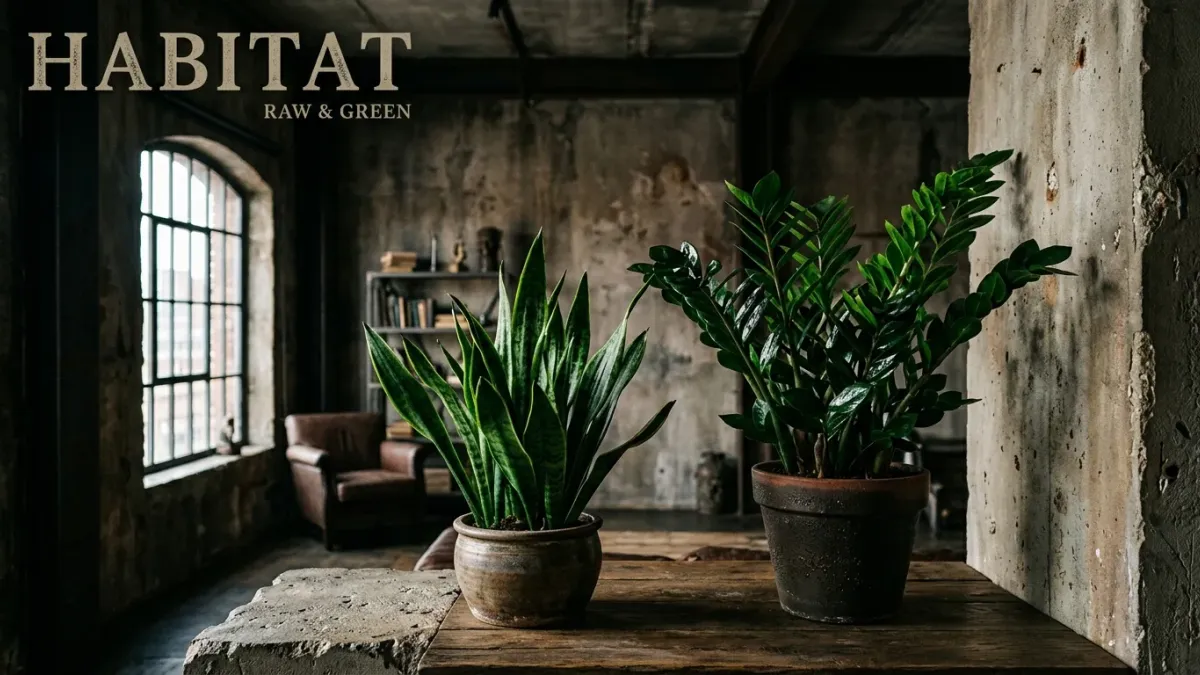
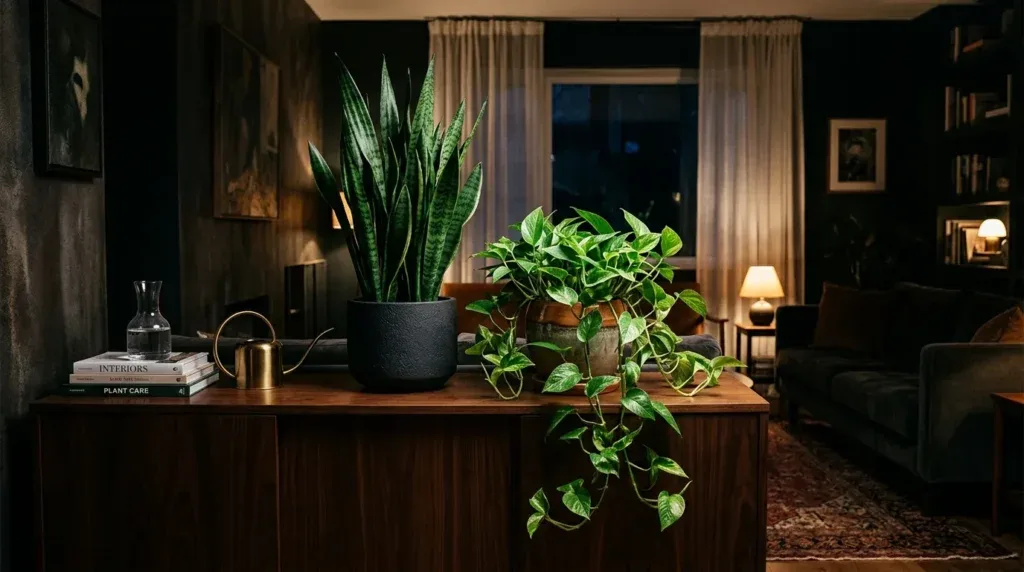
Snake Plant (Sansevieria trifasciata): Truly a champion of resilience! Varieties like 'Laurentii' or 'Zeylanica' are virtually indestructible. They can handle anything from bright indirect to incredibly low light, making them perfect for those really challenging spots. Their upright, architectural leaves add a modern touch to any space.
Care Tip: The number one killer for snake plants in low light is overwatering. Allow the soil to dry out completely between waterings, often every 3-4 weeks, or even longer in winter. When you do water, water thoroughly until it drains from the bottom. These plants are built for drought, not soggy feet.
-
ZZ Plant (Zamioculcas zamiifolia): Another absolute superstar for beginners and low-light areas. With its glossy, dark green leaves and upright growth habit, the ZZ Plant is incredibly handsome and equally forgiving. It stores water in its thick rhizomes, making it incredibly drought-tolerant.
Care Tip: Like the Snake Plant, the ZZ Plant will quickly tell you if it's getting too much water by developing yellowing leaves. Water only when the soil is completely dry, usually every 2-4 weeks. Honestly, I've left my ZZ Plant for over a month without water and it barely blinked!
-
Pothos (Epipremnum aureum): Known for its beautiful trailing vines and heart-shaped leaves, Pothos is a versatile and adaptable plant. While it prefers medium to bright indirect light, it tolerates low light remarkably well, though its growth will be slower, and variegation (patterns on leaves) might become less pronounced. Varieties like 'Jade' (solid green) tend to do best in lower light.
Care Tip: Pothos will tell you when it's thirsty by slightly drooping its leaves. Water when the top 2-3 inches of soil feel dry to the touch, usually every 7-10 days. They are quite forgiving if you miss a watering, quickly bouncing back once hydrated.
-
Peace Lily (Spathiphyllum): These elegant plants are famous for their dark green foliage and beautiful white "flowers" (actually modified leaves called spathes). They thrive in medium to low light, and in lower light, they might produce fewer flowers but will still maintain lush foliage. They are fantastic air purifiers.
Care Tip: Peace Lilies are dramatic communicators. They will visibly droop when they need water, making it easy to know when to water. Once they start to droop, give them a good soak. Water when the top inch or two of soil is dry, typically once a week.
-
Cast Iron Plant (Aspidistra elatior): The name says it all! This plant is incredibly tough and truly lives up to its moniker, tolerating deep shade, neglect, and varying temperatures. It has long, dark green, leathery leaves that make a striking statement.
Care Tip: The Cast Iron Plant prefers to be on the drier side. Water sparingly, allowing the soil to dry out almost completely between waterings. Its slow growth means it's not a heavy feeder, so fertilize very rarely, if at all.
Essential Care Tips for Low Light Plant Success
While these plants are tolerant, they still benefit from smart care. Adjusting your routines for low-light conditions is key to their long-term health. Based on my experience, these adjustments make all the difference.
Watering Wisdom: Less is More
This is arguably the most critical tip for low-light plants. In dimmer conditions, plants use water much more slowly because their metabolic processes, including photosynthesis and transpiration, slow down. This means the soil stays wet for longer. Overwatering is the number one killer of low-light plants, leading to dreaded root rot. Always check the soil moisture with your finger or a moisture meter before watering. For most low-light plants, allow the top 2-4 inches of soil to dry out completely, or even more, before watering again. When you do water, water thoroughly until it drains from the bottom of the pot, then discard any excess water.
Soil and Drainage: Crucial for Preventing Root Rot
Because slow-drying soil is a risk, a well-draining soil mix is absolutely essential. This means a mix that allows water to pass through freely, preventing waterlogging. A good general recipe for many low-light tolerant plants is: 50% high-quality indoor potting mix, 30% perlite (small white volcanic rock that improves drainage and aeration), and 20% orchid bark or coarse sand. This blend provides enough structure and nutrients while ensuring excellent drainage. Always use pots with drainage holes – it's non-negotiable for plant health!
Fertilization: When and How Much in Dim Conditions
In low light, plants grow much slower, so their nutrient needs are significantly reduced. Over-fertilizing can lead to nutrient burn and stress. I typically recommend fertilizing low-light plants only during their active growing season (spring and summer), and even then, at half or quarter strength of a balanced liquid fertilizer (e.g., a 10-10-10 or 5-5-5 formula). For truly low-light tolerant plants like ZZ and snake plants, fertilizing just once or twice a year might be sufficient. Skip fertilization entirely in fall and winter when light levels are naturally lower and growth has stalled.
Dusting and Cleaning Leaves: Why it Matters for Low Light
This simple act is often overlooked but becomes even more important for plants in dim conditions. Dust accumulates on leaves, blocking what little light your plant is receiving and hindering its ability to photosynthesize efficiently. Regularly wipe down the leaves of your low-light plants with a soft, damp cloth. This not only keeps them looking shiny and beautiful but also helps them make the most of every photon of light available.
Troubleshooting & Thriving: Keeping Your Low Light Gems Happy
Even the toughest plants can sometimes show signs of distress. Knowing how to interpret these signals is a hallmark of an experienced plant parent. Let me add something here: don't panic! Most issues are easily fixable once you know what to look for.
What to Do When Leaves Turn Yellow or Brown
Yellowing leaves, especially lower ones, are a classic sign of overwatering for low-light plants. If you see this, immediately check the soil. If it's soggy, let it dry out completely before watering again. For severe cases, repotting into fresh, dry, well-draining soil might be necessary. Brown, crispy tips or edges can sometimes indicate too little humidity or underwatering, but for low-light plants, it's often a sign of environmental stress or even a reaction to too much fertilizer. Consider misting occasionally or placing the plant near a humidifier if the air is very dry. To be fair, sometimes a plant just sheds an old leaf, and that's perfectly normal.
When to Consider Supplemental Light
If your "low light" spot is truly very dark, or if your plants are surviving but not thriving (e.g., very leggy growth, lack of new leaves, fading variegation), you might consider a small grow light. Even a simple, full-spectrum LED light bulb in a desk lamp can make a huge difference. Place it a foot or two above your plant for 8-12 hours a day. It's a game-changer for boosting growth and vibrancy without needing a sunny window.
Repotting Low Light Plants: Slower Growth, Less Frequent Repotting
Because low-light plants grow slower, they won't need repotting as often as their bright-light counterparts. You might only need to repot every 2-3 years, or even longer for very slow growers like ZZ and Snake Plants. When you do repot, choose a pot that's only one size larger (e.g., from a 6-inch to an 8-inch pot) and always use a fresh, well-draining soil mix. Signs it's time to repot include roots growing out of the drainage holes or the plant becoming top-heavy.
Quick "What to Do This Week" Takeaway
This week, choose one of the low-light plant champions from our list, find a dim but not dark spot in your home, and bring home your new green companion. Remember to check the soil moisture before watering, and resist the urge to overwater. Give its leaves a gentle wipe to help it absorb all the light it can. You'll be amazed at how much life even the shadiest corners can hold!
There you have it! Don't let a lack of bright windows deter you from enjoying the beauty and benefits of indoor plants. With the right selections and a few simple adjustments to your care routine, your low-light spaces can become just as lush and vibrant as any sun-drenched windowsill. Happy planting, and remember, easyhouseplantcare.com is always here to help you on your green journey!