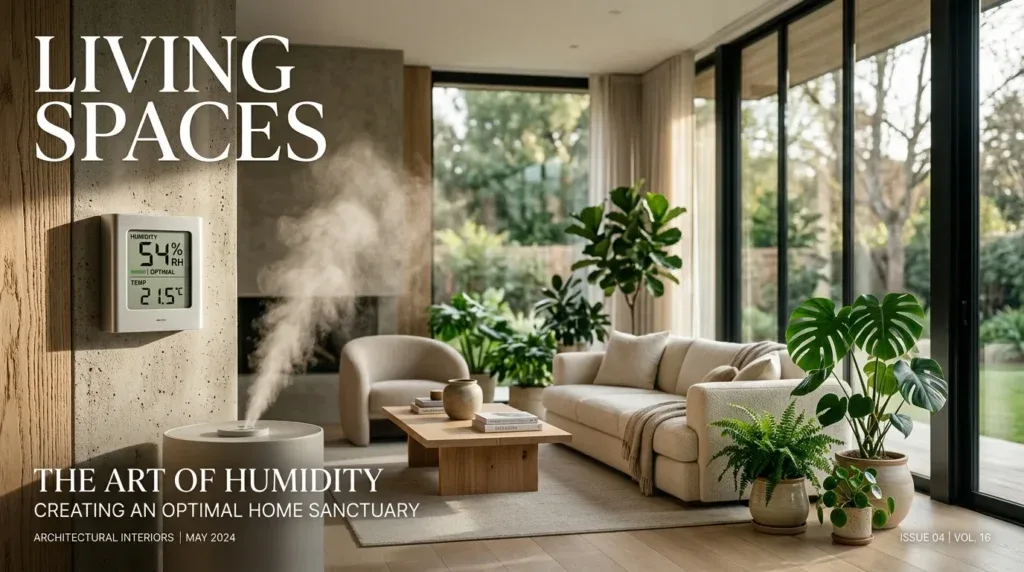
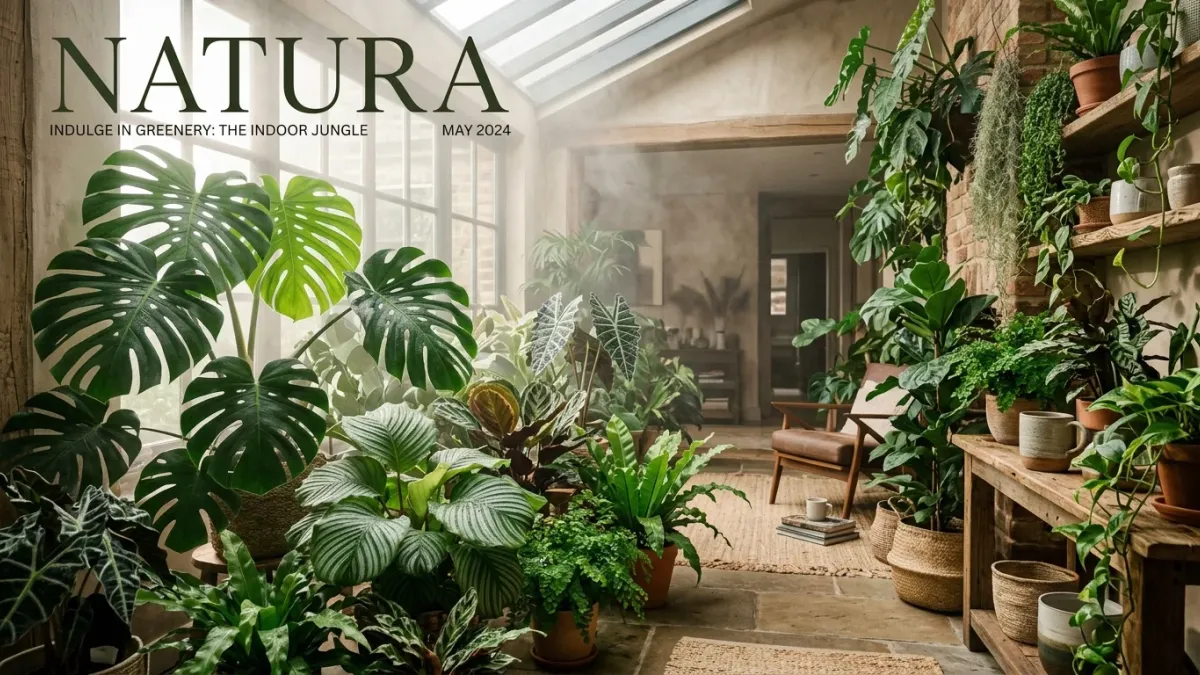
If you have ever noticed the tips of your favorite indoor plants turning dry, brown, and crispy despite keeping up with a strict watering schedule, ambient air moisture is almost certainly the missing variable. Indoor living environments—especially air-conditioned summer rooms and furnace-heated winter spaces—typically maintain a relative humidity between 20% and 40%. Meanwhile, tropical foliage species originating from the understory of equatorial rainforests crave atmospheric moisture levels ranging from 60% to 80% to maintain cell turgor and facilitate efficient photosynthesis.
Quick answer: Most tropical houseplants thrive when relative humidity is maintained between 50% and 70%. You can easily boost local air moisture around your plants by clustering species together, utilizing shallow pebble trays filled with water, or running a ultrasonic cool-mist humidifier near your indoor garden setup.
Understanding Humidity and Tropical Plant Biology
Relative humidity (RH) refers to the percentage of water vapor present in the air relative to the maximum amount the air can hold at a given temperature. Warm air naturally holds more water vapor than cold air, which is why indoor heating systems during winter drastically drop ambient RH levels down to desert-like conditions (often below 20%). When the surrounding air is excessively dry, the vapor pressure deficit (VPD) between the interior of a plant's leaf and the room air increases significantly.
Plants regulate gas exchange and moisture loss through tiny microscopic pores on their foliage called stomata. In high-humidity conditions, plants can keep their stomata open to take in carbon dioxide for growth while losing minimal water through transpiration. However, when indoor air becomes dry, transpiration accelerates rapidly. The roots simply cannot draw water up from the soil fast enough to replace what is lost through the foliage, leading to tissue desiccation, brown leaf margins, and stunted leaf expansion.
Understanding these environmental demands allows you to tailor microclimates within your home. While desert natives like cacti and succulents thrive in low ambient moisture (20–30% RH), popular broadleaf tropicals require target humidity zones to prevent long-term health decline. Neglecting atmospheric moisture often leads to chronic plant stress, making your greenery far more susceptible to pest incursions and opportunistic pathogens.
Plant parent tip: Don't rely on leaf misting with a spray bottle as your primary humidity strategy. Misting only raises air moisture for 5 to 10 minutes and leaves standing water droplets on foliage, which can inadvertently invite fungal leaf spot diseases if air circulation is poor. Instead, invest in a digital hygrometer to monitor real room levels and rely on continuous evaporation methods.
Recognizing the Signs of Low vs High Ambient Moisture
Your houseplants communicate their environmental distress clearly if you know what visual cues to analyze. Low humidity symptoms are frequently misdiagnosed as underwatering, leading plant owners to overwater the soil, which subsequently causes root rot. Conversely, excessively stagnant, humid air without proper ventilation presents its own set of potential problems for indoor botanicals.
When atmospheric moisture drops below acceptable thresholds, sensitive foliage begins to suffer rapid desiccation. Plants like Calathea orbifolia, Maranta leuconeura (Prayer Plant), and Nephrolepis exaltata (Boston Fern) are classic "canaries in the coal mine" for low ambient air moisture. Recognizing these early signs allows you to intervene before structural tissue death occurs.
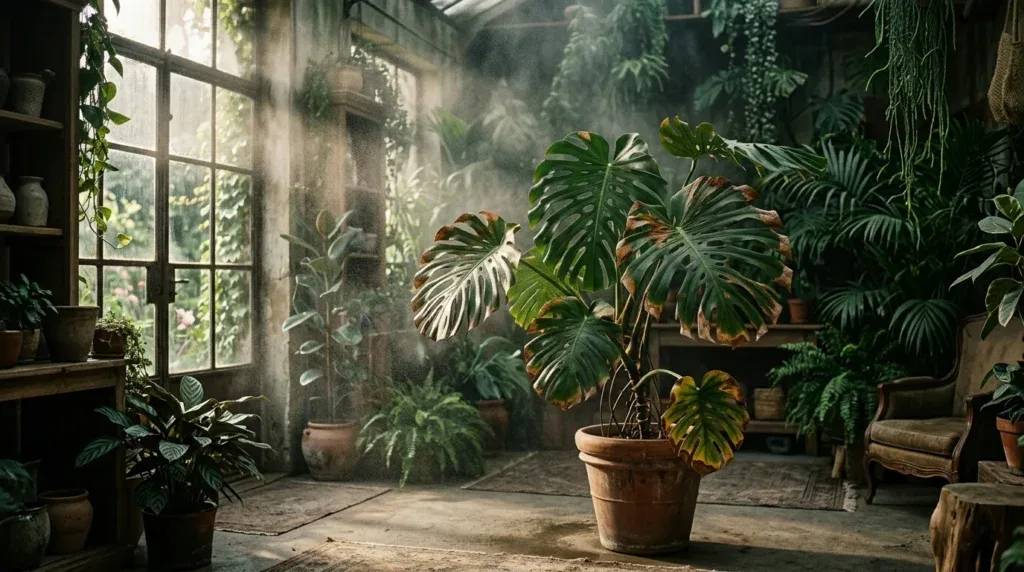
- Crispy, Brown Leaf Tips and Margins: The edges of mature leaves dry out, crumble to the touch, and develop yellow halos as cells collapse from excessive transpiration rate.
- Curling or Rolled Leaves: Species like Calatheas and Stromanthes curl their leaves inward to minimize surface area exposed to dry air currents.
- Bud Drop and Deformed New Leaves: Emerging unfurling leaves on species like Monstera deliciosa or Philodendron verrucosum get stuck, tear during opening, or display pale, undersized growth.
- Pest Outbreaks (Spider Mites): Two-spotted spider mites multiply exponentially in warm, dry air (under 40% RH). Inspecting leaf undersides for fine webbing is critical during dry winter months. Check our comprehensive guide on houseplant pest management to identify early infestations.
On the flip side, keeping humidity excessively high (above 85% RH) without adequate airflow creates ideal breeding grounds for powdery mildew, botrytis, and bacterial soft rot. Striking the right balance keeps cell walls rigid, foliage pristine, and pest populations under control.
Target Humidity Levels by Plant Group
Not every indoor plant requires rainforest-level air saturation. Grouping plants according to their ecological origins ensures you provide appropriate ambient conditions without causing fungal problems on low-humidity lovers. Below is a breakdown of target conditions, ideal light levels measured in foot-candles (fc), and temperature preferences for popular indoor foliage categories.
| Plant Category | Example Species | Target RH (%) | Ideal Temp Range | Light Needs (Foot-Candles) |
|---|---|---|---|---|
| High Humidity Lovers | Calathea, Ferns, Fittonia, Anthurium | 60% – 80% | 18°C – 26°C (65°F – 80°F) | 100 – 400 fc (Medium Indirect) |
| Moderate Humidity Seekers | Monstera deliciosa, Pothos, Ficus elastica | 50% – 60% | 18°C – 24°C (65°F – 75°F) | 400 – 1,000 fc (Bright Indirect) |
| Low Humidity Tolerant | Sansevieria (Snake Plant), ZZ Plant, Cacti | 30% – 40% | 15°C – 29°C (60°F – 85°F) | 100 – 800+ fc (Low to Direct Sun) |
4 Proven Methods to Boost Indoor Plant Humidity
Creating a thriving microclimate for your collection does not require turning your home into a damp greenhouse. By combining simple physical setups and strategic placement, you can effortlessly raise ambient humidity around target plant zones by 15% to 30%.
1. Grouping Plants to Form a Microclimate
In nature, plants do not grow in isolation. Through the process of transpiration, plants naturally release moisture into the surrounding air through leaf stomata. When you cluster multiple houseplants close together—combining broadleaf Monsteras, dense Ferns, and trailing Pothos—you trap this released water vapor within the collective canopy. This creates a localized microclimate where ambient humidity remains noticeably higher than in isolated areas of the room. Always maintain a few inches of space between individual pots to ensure sufficient air circulation and prevent pest transfer.
2. Setting Up Evaporative Pebble Trays
Pebble trays offer an easy, electricity-free technique for localized moisture delivery. Take a shallow plastic or ceramic tray and fill it with an inch of smooth river stones, pea gravel, or expanded clay pebbles (LECA). Pour clean water into the tray until it sits just below the surface of the stones. Place your potted plant directly on top of the dry pebbles. As ambient room air circulates across the tray, water evaporates slowly upward around the foliage. Crucially, the bottom of the pot must remain resting above the waterline to avoid waterlogging the well-draining soil mix and triggering root rot.
3. Utilizing an Ultrasonic Cool-Mist Humidifier
For dedicated collections of high-humidity tropicals, an automatic ultrasonic cool-mist humidifier is the most effective solution available. These devices break water into micro-fine droplets that disperse evenly throughout the air without raising room temperatures. Position the humidifier 3 to 5 feet away from your plants, ensuring the direct plume of mist does not condense heavily onto leaf surfaces. Set the unit's built-in humidistat to maintain 55–65% RH for ideal growth. Using distilled or reverse-osmosis water prevents white mineral dust from coating leaf surfaces and clogging internal machine components.
4. Leveraging High-Moisture Rooms (Bathrooms and Kitchens)
Certain living spaces naturally feature higher baseline ambient moisture due to daily household activity. Bathrooms with windows providing medium to bright indirect light offer ideal habitats for moisture-loving species like Boston Ferns, Air Plants (Tillandsia), and Marantas. Steam generated from daily showers temporarily boosts humidity levels to 80% or higher. Similarly, kitchen spaces often maintain elevated air moisture due to cooking and washing up, making window sills in these areas prime real estate for humidity-sensitive plants.
Maintaining Substrate Moisture and Nutritional Balance
While atmospheric air moisture is crucial, it must work in harmony with proper root-zone hydrology and feeding protocols. High relative humidity slows down soil evaporation, meaning plants will drink water from their potting substrate at a slower pace compared to dry environments. Always check soil moisture before following a fixed schedule; wait until the top 2 inches (5 cm) of soil are dry to the touch for broadleaf tropicals, or top 1 inch for delicate ferns.
When repotting humidity-loving tropicals into a 2-inch larger pot size, select an aerated, well-draining soil mix designed to hold moisture without suffocating roots. A proven DIY recipe consists of:
- 50% Quality Potting Mix: Provides baseline organic nutrients and water retention.
- 30% Perlite or Pumice: Creates essential macro-pores for root aeration and rapid drainage.
- 20% Coarse Orchid Bark: Mimics native forest floor texture and prevents soil compaction over time.
During the active spring and summer growing season, nourish your foliage plants every 4 weeks with a balanced, water-soluble liquid fertilizer formulated at a 10-10-10 or 20-20-20 NPK ratio, diluted to half strength. Maintaining balanced nutrition ensures thick cell walls capable of resisting dry air spells and common insect pests like mealybugs and scale insects. Review our detailed watering schedule guide to establish perfect moisture balance throughout the changing seasons.
Common Humidity Mistakes to Avoid
Even well-intentioned indoor gardeners can make simple errors when trying to optimize humidity levels. Avoid these frequent pitfalls to keep your plant collection thriving:
- Placing Plants Near HVAC Vents: Positioning tropical plants directly in line with hot air heating vents or cold air conditioning drafts rapidly desiccates foliage, regardless of room humidity setups.
- Submerging Pot Bases in Pebble Trays: Allowing pot bases to sit in standing water leads to capillary absorption, waterlogged soil, anaerobic bacterial growth, and destructive root rot.
- Relying Exclusively on Foliar Misting: Mist droplets evaporate within minutes, offering zero long-term humidity benefit while risking fungal spores germination on damp leaves.
- Ignoring Air Circulation: High humidity paired with completely stagnant air encourages fungal infections. Use a low-speed oscillating fan pointed away from plants to maintain gentle air movement.
Frequently Asked Questions
Can I put all my tropical houseplants in the bathroom for humidity?
Only if the bathroom provides adequate light. High humidity cannot compensate for a lack of photosynthetically active radiation (PAR). Ensure your bathroom has a window supplying bright indirect light, or supplement with an LED grow light before moving light-hungry tropicals like Monstera deliciosa or Ficus lyrata into the room.
Do succulents and cacti need added indoor humidity?
No, succulents, cacti, and thick-leaved desert species prefer low humidity levels between 20% and 40%. High air moisture combined with cool temperatures slows down soil drying, significantly increasing the risk of stem and root rot in arid-adapted plants.
What is the best type of water to use in a plant humidifier?
Distilled, filtered, or reverse-osmosis water is best. Tap water high in dissolved minerals (calcium and magnesium) produces a fine white dust that settles over leaves and furniture, which can eventually block light absorption through leaf surfaces.
Are high-humidity tropical plants toxic to pets?
Many common high-humidity species—such as Calathea, Maranta, and Boston Ferns—are non-toxic to cats and dogs. However, other tropicals like Philodendron, Monstera, and Anthurium contain insoluble calcium oxalate crystals that cause oral irritation if ingested. Always verify safety specs via the ASPCA Toxic and Non-Toxic Plants List before bringing new foliage into pet-friendly homes.
Actionable Care Plan for Success
If you want to immediately stop leaf tip browning on your tropical collection, start by placing a small digital hygrometer right next to your most sensitive species (such as a Calathea or Fern) to establish a baseline room reading. If humidity reads below 50%, assemble a simple pebble tray or cluster 4 to 5 plants closely together near bright indirect window light. For larger indoor jungle setups, invest in a dedicated 4-liter ultrasonic cool-mist humidifier set to 60% relative humidity, and watch your tropical foliage reward you with vibrant, unblemished leaf expansion season after season.
Sources
- ASPCA Toxic and Non-Toxic Plants Database
- Missouri Botanical Garden Plant Care Guides
- Royal Horticultural Society (RHS) Indoor Plant Care Standards