
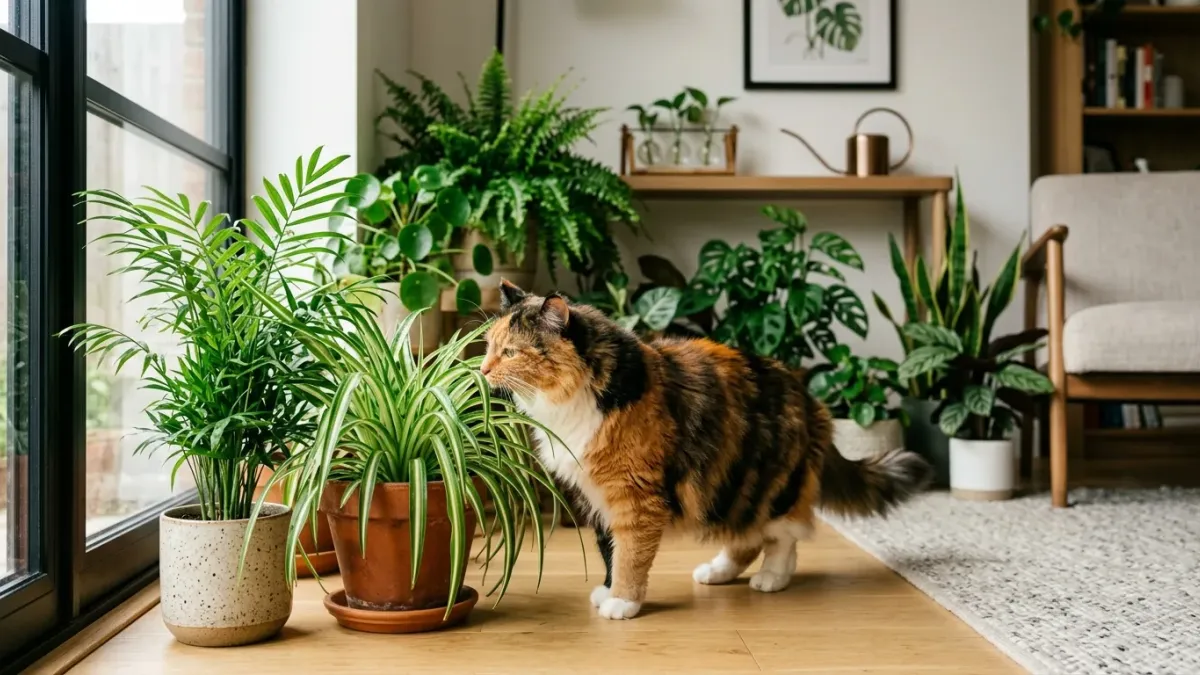
As devoted houseplant enthusiasts and loving pet parents, we often face a unique challenge: how to embrace the lush beauty of an indoor garden without creating a potential hazard for our curious companions. I’ve been there, watching my kitten eye a trailing vine with a glint of mischief, or my dog sniff intently at a newly acquired pot. The good news? You absolutely can cultivate a vibrant, thriving indoor jungle that coexists peacefully and safely with your beloved cats, dogs, and other furry friends.
Here at Easy Houseplant Care, we believe in empowering you with practical, actionable knowledge. This guide goes beyond just listing safe plants; we'll delve into understanding your pet's natural curiosity, selecting truly non-toxic beauties, and implementing smart design strategies to ensure your green sanctuary is a haven for everyone, paws included. Forget the complicated routines; let's get you confidently growing a beautiful, low-maintenance, and, most importantly, paws-itively safe home.
Understanding Your Pet's Green Curiosity & The "Why" Behind Safety
Before we dive into plant specifics, let's understand why your pets might be drawn to your houseplants in the first place. It's rarely malicious; often, it's just instinct and curiosity. Here are a few common reasons:
- Exploration & Play: Young pets, especially kittens and puppies, explore their world with their mouths. A dangling leaf or a rustling branch can be an irresistible toy.
- Boredom: A bored pet might turn to your houseplants for entertainment. Tugging at leaves or digging in soil can be a stimulating activity.
- Seeking Nutrients: While not a primary food source, some pets, particularly cats, instinctively chew on plants to aid digestion or obtain certain micronutrients (think cat grass).
- Stress or Anxiety: Chewing can be a self-soothing behavior for anxious pets.
- Taste & Texture: Simply put, some plants might just taste or feel interesting to them!
Understanding these motivations helps us proactively address the issue rather than just reacting to it. When we talk about plant toxicity, it's crucial to differentiate. Many plants are considered "toxic" because they contain compounds that cause immediate irritation (like calcium oxalates, found in many common houseplants such as Philodendrons and Monsteras, which cause burning in the mouth and throat) that often deters pets from eating more than a nibble. Others, however, contain systemic toxins that can lead to more severe, even life-threatening, issues affecting organs like the kidneys or heart. Our focus today is on plants that are unequivocally non-toxic, offering true peace of mind. Always err on the side of caution; if you have a particularly persistent chewer, even a mildly irritating plant might be best avoided.
The Foundation Plants: Our Champion Non-Toxic Choices for Every Space
Let's introduce you to some truly wonderful, unequivocally non-toxic houseplants that are also a breeze to care for. These are perfect for creating diverse textures and forms in your pet-safe haven, suitable for various light conditions and aesthetics. We'll skip the common ones you might already know about and introduce some fresh, equally forgiving options.
1. Lush & Lively Foliage: Peperomia Varieties
Peperomias are a fantastic, diverse genus of small, compact plants, many of which are completely safe for pets. They offer a huge variety of leaf shapes, sizes, and textures, making them perfect for adding visual interest without taking up too much space.
- Recommended Varieties: Peperomia obtusifolia (Baby Rubber Plant), Peperomia caperata (Ripple Peperomia), Peperomia clusiifolia (Jelly Plant).
- Light: They thrive in bright indirect light. A spot near an east or west-facing window, or a few feet back from a south-facing window, is ideal. Too much direct sun can scorch their leaves, while too little light can lead to leggy growth.
- Water: Peperomias prefer their soil to dry out almost completely between waterings. A good rule of thumb is to water when the top 2-3 inches of soil feel dry to the touch. They're prone to root rot if overwatered, so ensure excellent drainage.
- Soil: Use a well-draining potting mix. A good recipe is 50% standard indoor potting mix, 30% perlite, and 20% orchid bark or coarse sand. This ensures aeration and prevents waterlogging.
- Fertilizer: Feed lightly with a balanced liquid fertilizer (e.g., a 10-10-10 or 20-20-20 diluted to half strength) every 4-6 weeks during the growing season (spring and summer). Reduce or stop feeding in fall and winter.
- Common Mistakes: Overwatering is the biggest killer. Ensure the pot has drainage holes.
2. Elegant & Trailing: Hoya Carnosa 'Krimson Queen'
Hoya plants, also known as Wax Plants, are famous for their waxy leaves and beautiful, fragrant clusters of star-shaped flowers. The 'Krimson Queen' variety features stunning variegated leaves with creamy white or pink margins, making it a showstopper that's also pet-safe.
- Light: Bright indirect light is key for good variegation and flowering. They can tolerate some medium light, but their growth will be slower, and colors less vibrant. A few hours of gentle morning sun can be beneficial.
- Water: Allow the soil to dry out almost completely between waterings, especially during cooler months. Their thick, succulent-like leaves store water, making them quite drought-tolerant. When you water, water thoroughly until it drains from the bottom.
- Soil: Hoyas love an airy, well-draining, chunky mix. A great blend is 40% standard potting mix, 30% orchid bark, and 30% perlite. This mimics their epiphytic nature.
- Fertilizer: During spring and summer, feed monthly with a balanced liquid fertilizer diluted to half strength. For better blooms, consider a fertilizer slightly higher in phosphorus.
- Propagation: Easy to propagate from stem cuttings in water or moist soil. Ensure each cutting has at least one node and a few leaves.
- Common Mistakes: Overwatering and not enough light are the main issues. Be patient; Hoyas can be slow growers.
3. Bold & Resilient: Cast Iron Plant (Aspidistra elatior)
True to its name, the Cast Iron Plant is incredibly tough and forgiving, making it perfect for beginners or anyone who sometimes forgets to water. Its long, dark green leaves add a classic, structural element to any room, and it's completely non-toxic.
- Light: This plant is famous for tolerating low light conditions, but it will also do well in medium to bright indirect light. Avoid direct sunlight, which can scorch its leaves. It's an excellent choice for shadier corners.
- Water: The Cast Iron Plant prefers its soil to dry out almost completely between waterings. It's far better to underwater than to overwater. During winter, reduce watering significantly.
- Soil: A standard well-draining potting mix is perfectly fine. You can add a bit of perlite for extra drainage if your mix seems too heavy.
- Fertilizer: Requires very little fertilizer. Feed with a balanced liquid fertilizer diluted to half strength only once or twice during the entire growing season (spring/summer).
- Common Mistakes: Overwatering and too much direct sunlight are the main culprits for issues. It's a slow grower, so don't expect rapid changes.
4. Colorful & Cheerful: Polka Dot Plant (Hypoestes phyllostachya)
For a splash of color, the Polka Dot Plant is a delightful choice. Its vividly spotted leaves come in shades of pink, white, or red, providing a playful contrast to solid green foliage. It's a relatively compact plant, making it great for shelves or windowsills.
- Light: Prefers bright indirect light to maintain its vibrant leaf coloration. Too much direct sun can scorch the leaves, while too little light will cause the spots to fade and the plant to become leggy.
- Water: Keep the soil consistently moist but never soggy. Water when the top inch of soil feels dry. They can be a bit dramatic and wilt when thirsty, but usually perk up quickly after a good drink.
- Soil: A standard well-draining potting mix that retains some moisture is ideal.
- Fertilizer: Feed every 2-4 weeks during the growing season with a balanced liquid fertilizer diluted to half strength.
- Pruning: Pinch back the growing tips regularly to encourage a bushier, more compact growth habit and prevent it from getting too leggy.
- Common Mistakes: Letting the soil dry out completely (causes wilting) or overwatering (causes root rot). They can also get leggy if they don't receive enough light.
Strategic Placement & Pet-Proofing: Beyond Just Non-Toxic Plants
Choosing pet-safe plants is the first crucial step, but proactive placement and pet-proofing strategies are equally important for a truly worry-free environment. Even non-toxic plants can cause mild stomach upset if ingested in large quantities, so prevention is always best.
1. Height is Might: Utilizing Vertical Space
One of the easiest ways to keep plants away from curious paws is to elevate them.
- Hanging Baskets: Install sturdy hooks in your ceiling or use wall-mounted hangers for trailing plants like Hoyas or Lipstick Plants (another great pet-safe option similar to Hoya care). Ensure they are well out of jumping or reaching distance.
- High Shelves & Bookcases: Place smaller, lighter plants on shelves that are difficult for pets to access. Always ensure shelves are securely anchored to the wall to prevent tipping.
- Tall Plant Stands: Invest in heavy, stable plant stands that raise your plants off the floor. Choose stands with a wide base to prevent them from being easily knocked over.
- Terrariums & Cloches: For very small plants or those you want to showcase, a closed terrarium or a decorative glass cloche can offer physical protection while maintaining humidity and aesthetics.
2. Physical Barriers & Smart Potting
Sometimes, elevation isn't enough, or you want a floor-level plant.
- Plant Cages/Fences: For larger floor plants, decorative wire fences or small indoor trellises can create a subtle barrier.
- Heavy Pots: Use ceramic or terracotta pots that are heavy and difficult for pets to knock over. Avoid lightweight plastic pots for floor plants.
- Top Dressing: Cover the soil with a layer of large, smooth river stones or decorative pebbles. This discourages digging and prevents pets from eating the soil (which can sometimes contain fertilizer residues). Ensure the stones are too large to be a choking hazard.
- Designated "Pet Zones": If your pet loves to chew, consider dedicating a specific area where they *can* interact with plants safely. This could include a pot of cat grass (oats, wheat, barley) or catnip for felines, or basil or thyme (non-toxic herbs) for dogs. This redirects their attention to approved greens.
3. Training & Deterrents (Use with Caution)
While not a substitute for proper plant selection and placement, these can be supplementary tools.
- Bitter Apple Spray: A pet-safe, non-toxic spray that leaves an unpleasant taste. Lightly mist leaves of plants your pet seems drawn to. Reapply regularly.
- Scent Deterrents: Some pets dislike citrus or cayenne pepper (though be *very* careful with cayenne as it can irritate eyes/nose). Place citrus peels around the base of plants or sparingly sprinkle a tiny amount of cayenne (ensure it won't be inhaled or rub off on fur/eyes). Monitor your pet's reaction carefully.
- Positive Reinforcement: When you see your pet approaching a houseplant, gently redirect them to a favorite toy or their designated pet-safe plant. Reward them for engaging with appropriate items.
Remember, the goal is to make the houseplants less appealing than their alternatives, not to punish your pet.
Proactive Care & Emergency Preparedness
Even with the best intentions and strategies, accidents can happen. Being prepared offers true peace of mind.
Regular Plant Health Checks
Keeping your plants healthy makes them less attractive to pests and potentially less interesting to your pets. A healthy, well-cared-for plant is less likely to drop leaves, which might otherwise tempt a curious pet to investigate. Regularly inspect your plants for signs of pests or disease, and promptly address any issues.
Knowing the Signs of Ingestion
If you suspect your pet has ingested a part of a plant (even a non-toxic one, as large quantities can still cause mild upset), look for these symptoms:
- Vomiting or diarrhea
- Lethargy or weakness
- Drooling or pawing at the mouth
- Lack of appetite
- Difficulty breathing or swallowing
- Changes in behavior or coordination
Emergency Contact Information: Have It Ready!
This is crucial. Keep these numbers readily accessible:
- Your Veterinarian's Office: Your primary point of contact. Know their emergency hours.
- Emergency Vet Clinic: For after-hours or severe situations.
- ASPCA Animal Poison Control Center: (888) 426-4435 (consultation fee may apply).
- Pet Poison Helpline: (855) 764-7661 (consultation fee may apply).
When calling, have the plant's exact name (botanical name if possible), your pet's species, breed, age, and weight, and details of how much was ingested and when, ready to provide.
First Aid Basics (When to Act, When to Wait)
If your pet has eaten a plant and is showing symptoms, the best course of action is to contact your vet immediately. Do NOT try to induce vomiting without professional guidance, as it can sometimes do more harm than good, depending on the type of toxin or plant material ingested.
Common Mistakes to Avoid in Your Pet-Safe Journey
- Assuming All "Easy" Plants are Pet-Safe: Many common, low-maintenance plants (like ZZ Plant or Pothos) are actually toxic. Always double-check!
- Relying Solely on a "Pet-Friendly" List: While lists are helpful, understanding your *individual pet's* behavior is paramount. A pet-safe plant on the floor might still get dug up by an energetic puppy.
- Ignoring Subtle Signs: Don't wait for severe symptoms. If you see nibbled leaves or disturbed soil, take action to adjust placement or deterrence strategies.
- Neglecting Pet Enrichment: A bored pet is a destructive pet. Ensure your furry friend has plenty of appropriate toys, exercise, and attention to divert their focus from your green babies.
- Using Unsafe Pest Control on Plants: If you use insecticides or fungicides on your plants, ensure they are also pet-safe, or remove the plant from pet access for the treatment duration and rinse thoroughly. Neem oil is generally considered safe for pets once dry, but always read labels.
Quick "What to Do This Week" Takeaway
Ready to transform your home into a beautiful, pet-safe oasis? Here's your actionable checklist for the week:
- Audit Your Current Plants: Go through your existing collection. Identify any plants that are known to be toxic (resources like the ASPCA website are excellent for this). Relocate them to areas completely inaccessible to pets, or consider rehoming them.
- Scout for Safe Spots: Look around your home for high shelves, secure plant stands, or areas where hanging baskets could be installed. Visualize where your new pet-safe plants will thrive safely.
- Plan Your First Pet-Safe Plant Purchase: Choose one or two from our recommended list (Peperomia, Hoya 'Krimson Queen', Cast Iron Plant, Polka Dot Plant) based on your available light. Pick up a bag of well-draining potting mix (e.g., 50% potting mix + 30% perlite + 20% orchid bark for Hoyas).
- Prepare Emergency Contacts: Save the numbers for your vet, emergency vet, and the ASPCA Poison Control Center in your phone and post them somewhere visible.
- Consider Pet Enrichment: Grab a new pet toy or a packet of cat grass seeds to give your pet a safe, engaging alternative to your houseplants.
By taking these thoughtful steps, you’re not just buying plants; you're designing a harmonious living space where both your leafy and furry family members can thrive. Happy planting!