Disclosure: As an Amazon Associate, we earn from qualifying purchases.
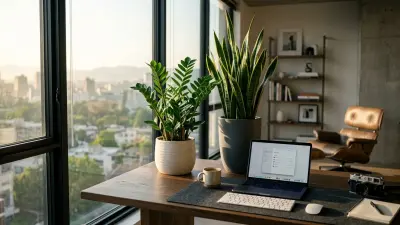
Maintaining office plants successfully requires matching shade-tolerant species with fluorescent or LED overhead lighting, establishing a conservative watering routine based on soil dryness, and utilizing high-aeration potting mixtures. Because commercial buildings feature climate control systems that dry out the air while slowing soil evaporation, choosing easy to care for plants—such as Snake Plants (Sansevieria trifasciata) or ZZ Plants (Zamioculcas zamiifolia)—ensures your workspace stays lush with minimal effort.
Understanding Office Lighting Conditions
Lighting is the most critical factor in office plant health. In indoor environments, light levels fall into three primary categories:
- Bright indirect light: Found within 3 to 5 feet of an unshaded window. Sunlight is intense but filtered through sheer curtains or blinds, without direct sunbeams hitting leaves.
- Medium indirect light: Found 6 to 10 feet away from south- or west-facing windows, or directly beside east-facing windows.
- Low light / Artificial light: Typical of cubicles or interior conference rooms with no natural windows, relying entirely on standard fluorescent or LED ceiling fixtures running 8 to 12 hours per day.
When natural light is unavailable, overhead LED lights supply sufficient foot-candles for low-light foliage plants. If leaf stems become elongated or pale, moving the plant closer to an artificial light source restores healthy growth.
Watering Rules and Soil Mix Recipes for Workspaces
Overwatering is the leading cause of houseplant failure in offices. Reduced airflow and constant indoor temperatures mean soil stays wet far longer than outdoor gardens.
The Top-2-Inch Rule
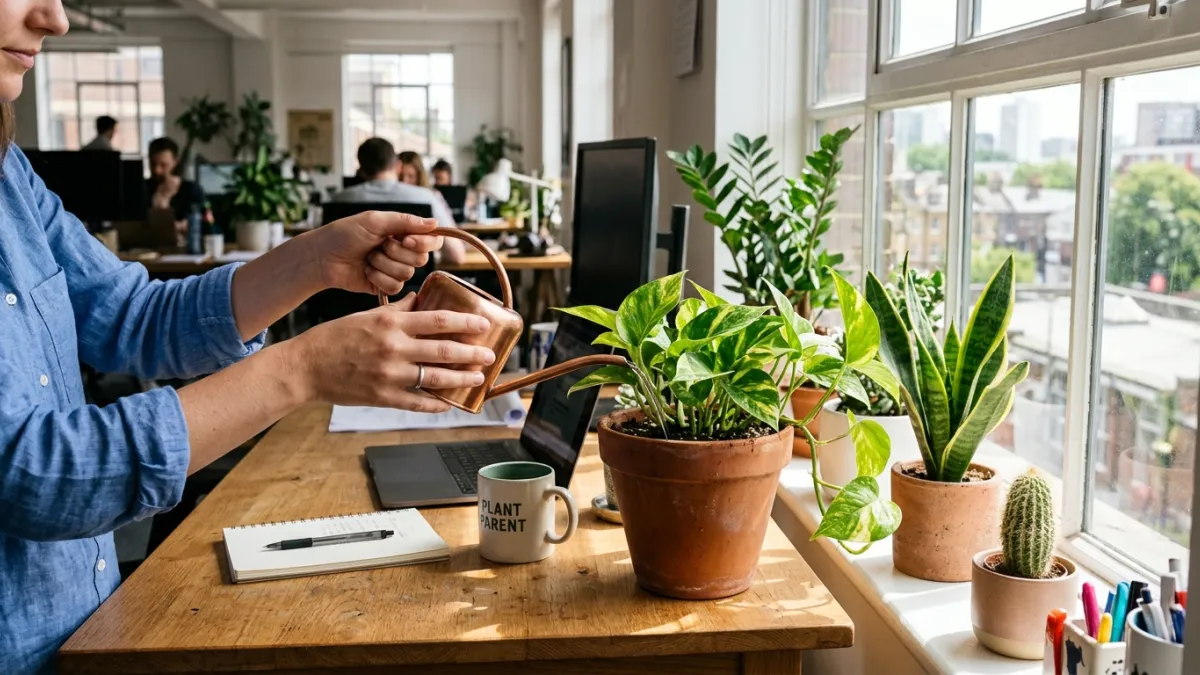
Never water on a strict day-of-the-week schedule. Instead, insert your finger or a digital moisture meter into the top layer of potting media. Water only when the top 2 inches of soil are dry to the touch. When watering, pour slowly around the root zone until liquid drains into the saucer below, then empty the catch tray after 10 minutes to avoid root rot.
Recommended Soil Mix Recipe
Grow Light,6000K Full Spectrum Indoor Plant Growing Lamp

A well-draining soil mix prevents stagnant moisture by allowing air to circulate around root structures. For desk plants, assemble this balanced mix:
- 50% Standard Potting Soil: Base material for moisture retention.
- 30% Perlite: Volcanic glass granules that improve aeration and drainage.
- 20% Coarse Orchid Bark: Creates air pockets and prevents soil compaction over time.
Comparing Top Easy to Maintain House Plants
Selecting durable species streamlines maintenance office plants routines. Below is a breakdown of popular low-maintenance options suited for various office setups:
| Plant Variety | Light Requirement | Watering Schedule | Maintenance Level |
|---|---|---|---|
| Snake Plant 'Laurentii' | Low light to bright indirect | Every 2–3 weeks (top 2 inches dry) | Very Low |
| ZZ Plant (Zamioculcas zamiifolia) | Low fluorescent light | Every 3 weeks (drought-tolerant) | Very Low |
| Golden Pothos (Epipremnum aureum) | Medium to bright indirect | Every 7–10 days (top 2 inches dry) | Low |
| Chinese Evergreen (Aglaonema) | Low to medium indirect | Every 10–14 days | Low |
| Peace Lily (Spathiphyllum) | Medium indirect | Every 5–7 days (keep slightly moist) | Moderate |
Routine Maintenance: Cleaning, Pruning, and Feeding
Regular maintenance keeps plants photosynthesizing efficiently in dusty indoor spaces.
Dust Removal
Office heating and cooling ducts deposit dust on foliage, blocking light absorption. Wipe leaves monthly with a damp microfiber cloth or soft sponge using clean water.
Fertilization Schedule
Plant Pots 7 Inch Self Watering Pots, 6 Pack Plastic Planters with Drainage Holes and Clear Saucers,Plastic Flower Pots for Indoor Out Door Plants (Black)

Apply a balanced 10-10-10 water-soluble liquid fertilizer diluted to half strength once every 4 to 6 weeks from spring through early autumn. Pause fertilizing during late autumn and winter when plant growth naturally slows.
Pruning and Grooming
Trim yellow or dry brown foliage at the base using sharp, disinfected shears. Trimming dead leaves redirects energy toward vibrant new growth and improves airflow around the stem cluster.
Managing Pest Control and Dust Prevention
Indoor plants occasionally attract common pests like fungus gnats (tiny black flies breeding in damp soil) or mealybugs (cotton-like white spots along stem joints).
- Fungus Gnats: Allow top soil layers to dry thoroughly between waterings, and place yellow sticky traps near the base of the pot.
- Mealybugs & Scale: Dab individual pests with a cotton swab dipped in 70% isopropyl alcohol, or spray leaves with ready-to-use organic neem oil spray once per week until resolved.
Common Mistakes to Avoid in Office Plant Care
- Dumping Leftover Coffee into Pots: Acidic liquids, sugar, and creamer create ideal breeding conditions for mold and bacterial infections.
- Leaving Pots in Standing Water: Waterlogged trays suffocate root tissues, causing rapid yellowing and root decay.
- Placing Plants Near HVAC Vents: Direct drafts from air conditioners or heating vents scorch foliage edges and dry out leaves.
What to Do This Week: Your 5-Minute Checklist
Miracle-Gro Leaf Shine Spray - For Indoor Hard-Leaved Houseplants, Cleans and Beautifies Foliage - 8 fl. oz. (2 Pack)

- Check soil moisture on all desk plants using the 2-inch depth test.
- Wipe dust off foliage with a damp cloth.
- Empty accumulated water from bottom saucers.
- Rotate pots 90 degrees to ensure even light exposure on all sides.
Frequently Asked Questions
Can houseplants survive in an office without windows?
Yes. Low-light species such as Snake Plants and ZZ Plants tolerate artificial LED or fluorescent lighting when lights stay on for 8 to 12 hours daily.
How often should office plants be fertilized?
Feed office plants once every 4 to 6 weeks during the spring and summer active growth phase using a balanced 10-10-10 liquid fertilizer diluted to half strength. Do not fertilize in winter.
What is the easiest indoor plant to maintain on a desk?
The ZZ Plant and Snake Plant are widely regarded as the most resilient choices because they store water efficiently and tolerate low light levels and dry office air.