
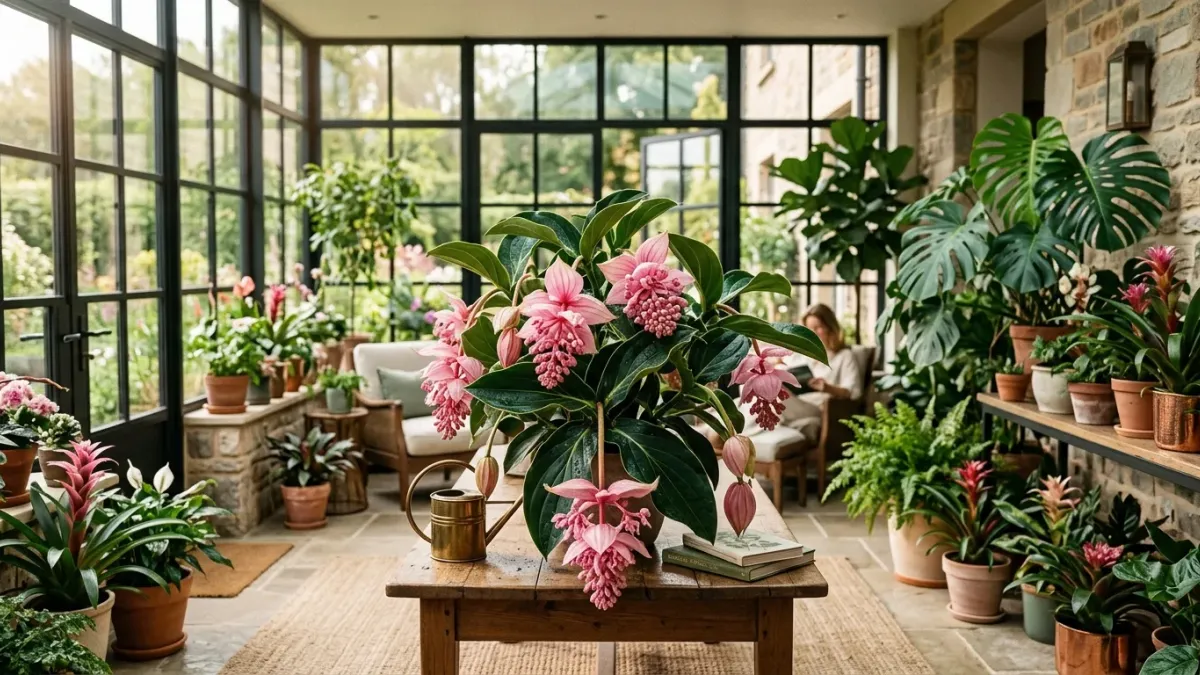
There is nothing quite like watching a tight green bud unfurl into a vivid blossom inside your own home. While lush green foliage brings life to an apartment, vibrant floral displays bring a sense of celebration. However, many plant parents find that after buying a flowering specimen from the nursery, it drops its initial blooms and stubbornly refuses to flower ever again. The good news is that indoor blooming isn't locked behind secret professional grower secrets; it simply requires giving your plant the specific environmental cues that trigger its reproductive cycle.
Quick answer: To stimulate indoor flowering, increase light exposure to bright indirect levels (1,500–2,500 lux), introduce a slight 5–10°F (3–5°C) night temperature drop, and feed with a high-phosphorus fertilizer (such as a 10-30-20 NPK formula diluted to half-strength) every two to three weeks during active growth. Promptly remove faded blossoms to redirect the plant's energy into fresh bud formation.
Light: The Primary Engine Behind Bud Formation
Photosynthesis provides the fundamental energy required for vegetative growth, but generating blossoms requires double the carbohydrate energy. If your plant receives just enough light to produce green leaves, it simply will not have the leftover resources to throw out a flower spike. Most flowering tropicals require bright indirect light measuring between 1,500 and 2,500 lux (150 to 250 foot-candles) for at least 10 to 12 hours daily. Placing a flowering species in a dark hallway or several feet away from a north-facing window virtually guarantees a bloom drought.
Window orientation plays a massive role in whether your plants will push buds. An east-facing window offers gentle morning sun that works wonders for delicate bloomers like African Violets (Saintpaulia) and Peace Lilies (Spathiphyllum). South or west-facing windows provide the intense brightness required by Anthuriums, Kalanchoes, and Hibiscus, though you may need a sheer linen curtain during mid-afternoon peaks to prevent foliar scorch. If you want to check if your space meets these requirements, read through our comprehensive bright indirect light guide to calibrate your room light levels accurately.
When natural sunlight falls short during short winter days, full-spectrum LED grow lights can bridge the gap effortlessly. Plants utilize specific light wavelengths for different growth phases: blue spectrum light (400–450 nm) maintains compact stem structure and healthy leaves, while red spectrum light (600–700 nm) stimulates the phytochrome receptors responsible for bud initiation. Positioning a low-wattage full-spectrum LED panel roughly 8 to 12 inches above your plants on an automated 12-hour timer can encourage year-round blossoms even in windowless interior rooms.
Temperature Swings and Seasonal Cues
In natural habitats, plants rely on seasonal temperature fluctuations to signal the arrival of spring or the onset of rainy seasons—the exact conditions under which pollination is most successful. Modern homes, with central heating and air conditioning, maintain a flat, uniform temperature year-round. This lack of thermal variation often keeps plants trapped in a continuous vegetative state, where they produce leaves but never flower.
Creating a distinct day-to-night thermal shift is one of the most reliable ways to coax stubborn bloomers into flower. Most tropical indoor bloomers thrive when daytime temperatures hover between 18–24 °C (65–75 °F) with a deliberate drop to 13–18 °C (55–65 °F) at night. This drop reduces night-time respiration rates, enabling the plant to conserve the sugars manufactured during the day and direct them toward floral tissue development. Holiday cacti like the Christmas Cactus (Schlumbergera) and many Phalaenopsis orchids specifically require cool night temperatures below 15 °C (60 °F) for four to six weeks to trigger bud initiation.
Plant parent tip: I struggled for two full years to get my Phalaenopsis orchid to rebloom in my temperature-controlled living room. It stayed healthy with rich green foliage, but never produced a single spike. In late autumn, I moved the pot to a cool, unheated enclosed porch where nighttime temperatures regularly dipped down to 14 °C (57 °F). Within four weeks of this cool-night treatment, two sturdy flower spikes emerged from the main stem.
Targeted Nutrition: Balancing Nitrogen and Phosphorus
Feeding a flowering plant requires a completely different nutritional strategy than feeding a leafy foliage plant like a Monstera or Pothos. Standard houseplant foods are often high in nitrogen (the first number in the N-P-K ratio on the label). High nitrogen encourages rapid cell division and abundant green leaf growth, but excess nitrogen actively inhibits flowering by telling the plant to stay in a vegetative phase.
To encourage flowering, switch to a water-soluble bloom fertilizer featuring a higher middle number (Phosphorus) and a high final number (Potassium). Phosphorus stimulates healthy root infrastructure and bud development, while potassium manages water uptake and flower longevity. A balanced formula like 10-10-10 diluted to half-strength works well for routine maintenance, but feeding with a bloom booster ratio such as 10-30-20 during the early spring and summer growth cycles provides the exact chemical signals needed for bud formation. Consult our guide on houseplant soil blends to ensure your root zone has the structural integrity required to absorb these essential nutrients efficiently.
Soil texture is equally important for nutrient delivery. Heavy, compacted potting media suffocates delicate feeder roots, leading to root rot and flower bud abortion. A highly oxygenated substrate allows roots to absorb phosphorus rapidly without standing in stagnant water. Mix a fast-draining potting substrate using the following ratio:
- 50% Premium Potting Mix: Provides a rich base of organic peat or coconut coir for moisture holding.
- 30% Perlite or Pumice: Creates essential air pockets and prevents soil compaction over time.
- 20% Coarse Orchid Bark: Ensures immediate water drainage and mimics epiphytic growing environments.
| Plant Species | Light Level (Lux) | Ideal N-P-K Ratio | Watering Needs | Toxicity (ASPCA) |
|---|---|---|---|---|
| African Violet (Saintpaulia) | 1,200 – 1,800 lux | 7-9-5 or 12-36-14 | Keep moist; bottom water when top 1 inch is dry | Non-Toxic to Dogs & Cats |
| Peace Lily (Spathiphyllum) | 800 – 1,500 lux | 20-20-20 (half strength) | Allow top 2 inches (5 cm) to dry out thoroughly | Toxic to Dogs & Cats |
| Moth Orchid (Phalaenopsis) | 1,500 – 2,500 lux | 10-30-20 (during spike development) | Allow bark substrate to dry completely between waterings | Non-Toxic to Dogs & Cats |
| Flamingo Flower (Anthurium) | 1,800 – 2,800 lux | 15-30-15 | Water when top 50% of soil feels dry to touch | Toxic to Dogs & Cats |
Watering, Pruning, and Managing Flowering Stress
Proper moisture management maintains the hydraulic pressure needed to expand tight flower buds into open blooms. Dehydration forces the plant to enter self-preservation mode, causing it to drop delicate buds before they ever open—a frustrating phenomenon known as bud blast. Conversely, overwatering saturates the substrate, cutting off root oxygen and encouraging root rot pathogens that cause yellow leaves and sudden blossom drop. Water your flowering plants thoroughly until water runs freely out of the bottom drainage holes, then discard all runoff after 15 minutes.
Relative ambient humidity is another critical element. Tropical flowering species native to rainforest environments suffer when relative indoor air humidity drops below 40%. Dry indoor air draws moisture straight out of tender petals, crisping their edges and shortening flower lifespans. Maintain humidity levels between 40% and 60% by grouping plants together, elevating pots on pebble trays filled with water, or operating a gentle cool-mist ultrasonic humidifier nearby.
Pruning is the final physical catalyst for sustained blooming. Once a flower begins to fade, brown, or drop petals, the plant naturally shifts its focus toward seed production. Seed development requires enormous amounts of physiological energy, halting the production of new side shoots and secondary flower spikes. Deadheading—the practice of snipping off spent blooms at the base of their individual stems using sterile shears—signals the plant to stop seed production and instantly reallocate its hormonal energy toward developing lower dormant buds. Keep an eye out for sap-sucking pests like thrips and mealybugs that target tender floral buds, and check our houseplant pest management strategies if you notice sticky residue or deformed flowers.
Actionable Steps for Immediate Bloom Success
If your flowering plants have gone dormant and show no signs of life, take a few practical steps this weekend to jumpstart their reproductive cycle. First, assess their location and move all non-blooming specimens into a bright location within 2 to 3 feet of an unobstructed east or south-facing window. Inspect the drainage holes of the pot; if roots are bursting out the bottom, plan to step the pot size up by no more than 2 inches (5 cm) using a high-drainage bark and perlite substrate mixture.
Next, flush the soil with tepid room-temperature water to wash away accumulated fertilizer salts that burn tender root tips. Begin a bi-weekly feeding regimen using a specialized bloom booster formula diluted to half the strength recommended on the bottle. Finally, lower your night temperatures slightly by cracking an interior room door or adjusting your thermostat down a few degrees after sunset. By consistently meeting these natural environmental triggers, you can enjoy a continuous succession of vibrant, healthy blooms throughout the year.
Frequently Asked Questions
Why do my plant's flower buds turn brown and drop off before opening?
Bud drop—or bud blast—is almost always caused by sudden environmental stress. Common culprits include drafty air from heating vents, severe underwatering, low humidity under 40%, or drastic shifts in light intensity right when the buds are expanding.
Can I make my Peace Lily bloom if it is kept in low light?
Peace lilies can easily survive in low light conditions, but they will rarely produce their iconic white spathes without adequate light. Shift your plant to a spot with bright indirect light measuring around 1,200 to 1,500 lux to stimulate consistent flowering.
How long do indoor flowers usually last on houseplants?
Blossom longevity varies widely by species. Phalaenopsis orchid flowers can last up to three months, Anthurium blooms remain bright for four to six weeks, while individual African Violet blossoms typically last two to three weeks before needing to be deadheaded.
Should I re-pot my plant while it is currently in bloom?
Avoid repotting plants while they are actively flowering. The physical disruption to the root system causes root shock, which almost always forces the plant to drop its current flowers and buds to conserve survival energy. Wait until the blooming cycle is completely finished before upgrading pot size.
Sources
- Wikipedia: Phalaenopsis Care & Biology
- ASPCA Toxic and Non-Toxic Plants List
- Royal Horticultural Society (RHS) Indoor Plant Care Guidelines
- Missouri Botanical Garden PlantFinder Care Database